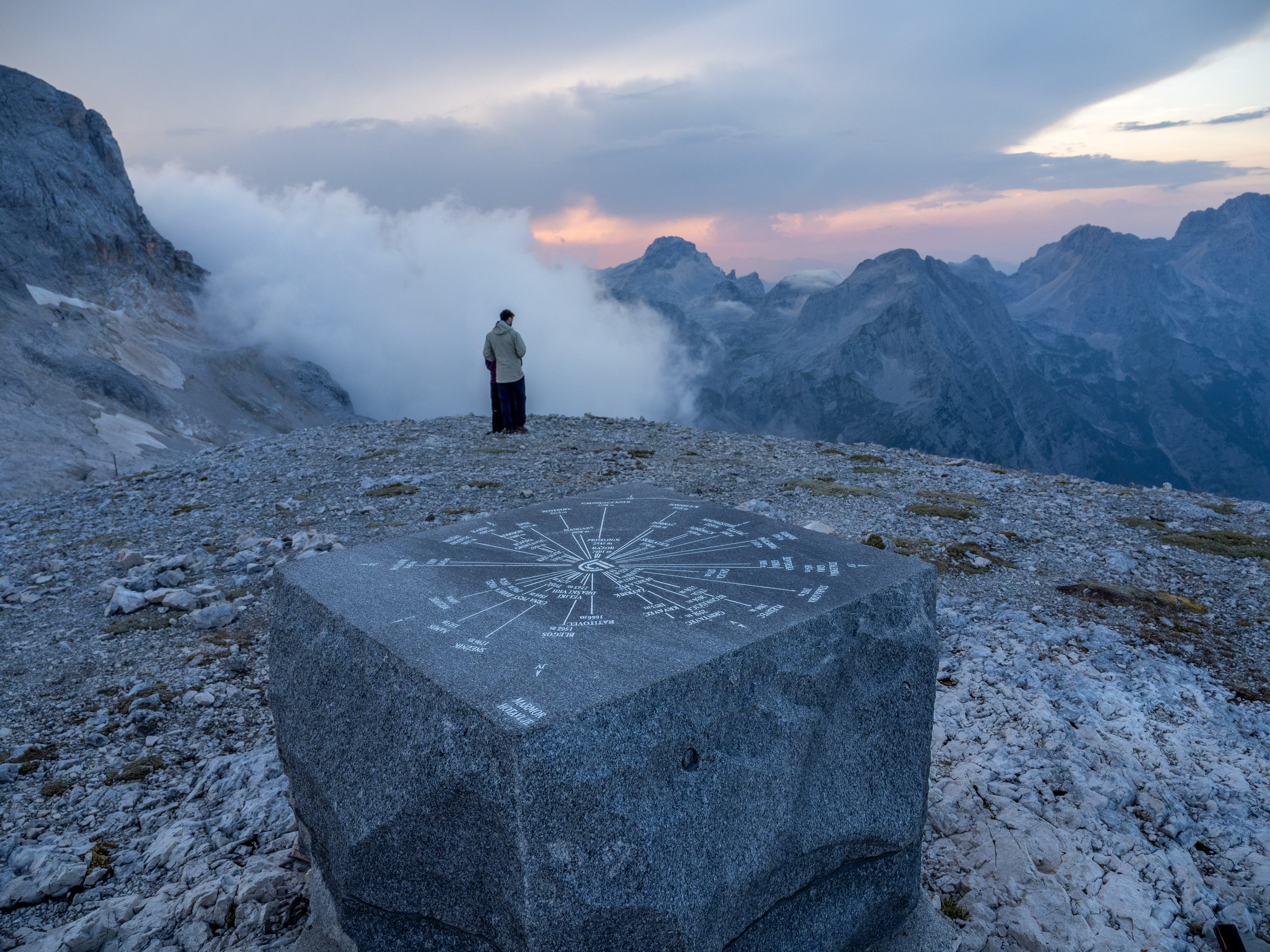
A Slovenian Summer and the Triglavian Question
If nothing else I am a man of tradition. Before heading out for a summer adventure of mountains and photography I always try to make sure I’m carrying an injury of some sort, habitually as a consequence of fell running, rock climbing, or generic stupidity. In the summer of 2025, my partner and me had decided to head out to Slovenia with the intention of running and climbing our way up a few peaks in the Julian Alps, and Triglav in particular, the country’s highest peak at 2,864 metres. Flights booked, accommodation sorted, and of course, a month before heading out, injury sustained. Idiot.
On a glorious summer evening in June, I headed out alone for a quick blast around the Fairfield Horseshoe, which takes in around 16.5km and eight Lake District peaks. No bad way to spend a couple of hours for any generic Cumbrian crag rat, such as myself. With eight peaks completed and on the run back into Ambleside I turned my left ankle really(!) badly. An evening in Lancaster A&E, a pair of crutches, and a sexy boot to hobble around on wasn’t quite what I had in mind. Double idiot! Still it’s nice to have an excuse why you might not be able to make it up a mountain like Triglav right?
With three and a half weeks to go until our flight to Ljubljana, the capital of Slovenia, it still seemed that recovery across that time frame was just about doable (with daily physio sessions and a life in my local gym). Hence, we flew out in late July and after three nights of R&R in Ljubljana (what a city!) we jumped on the bus to the village of Mojstrana that lies just north of Triglav at the head of the Vrata Valley in western Slovenia.
Mojstrana: Two Weeks in the Vrata Valley
It’s hard to put into words how nice Mojstrana is as an alpine base camp. It really is my kind of mountaineering cup of tea. Small, off the beaten track, a few apartments for rent, along with a store, a couple of restaurants, and one and a half pubs. The heart of the village is the Slovenia Alpine Museum that is well worth a visit on rest days. They hire out via ferrata gear too, no bad thing, and outside sits an old bell that used to be rung (possibly rang, or clanged?!) when mountaineers would return from Triglav. The gallery below captures, albeit badly, the character of the village.
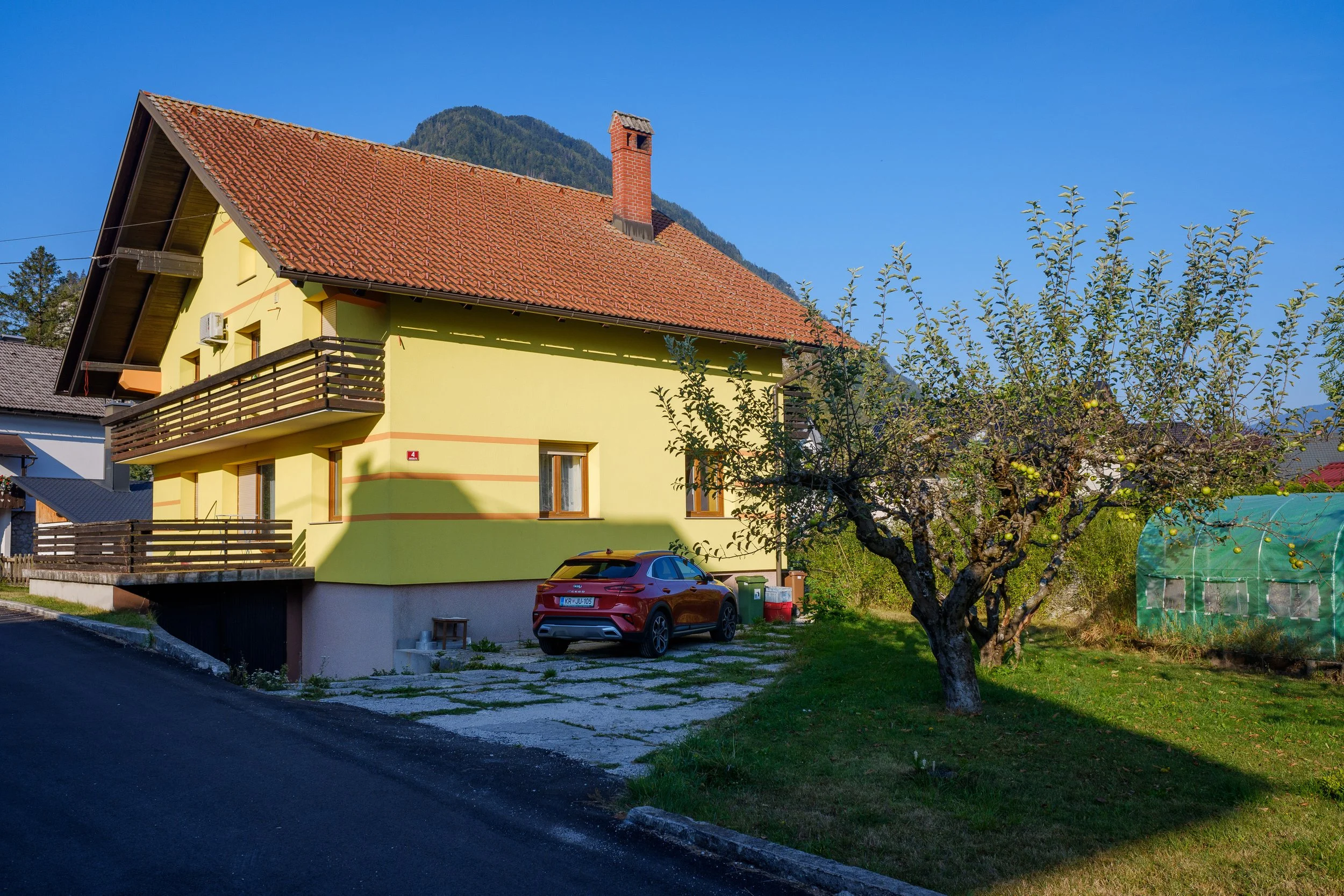
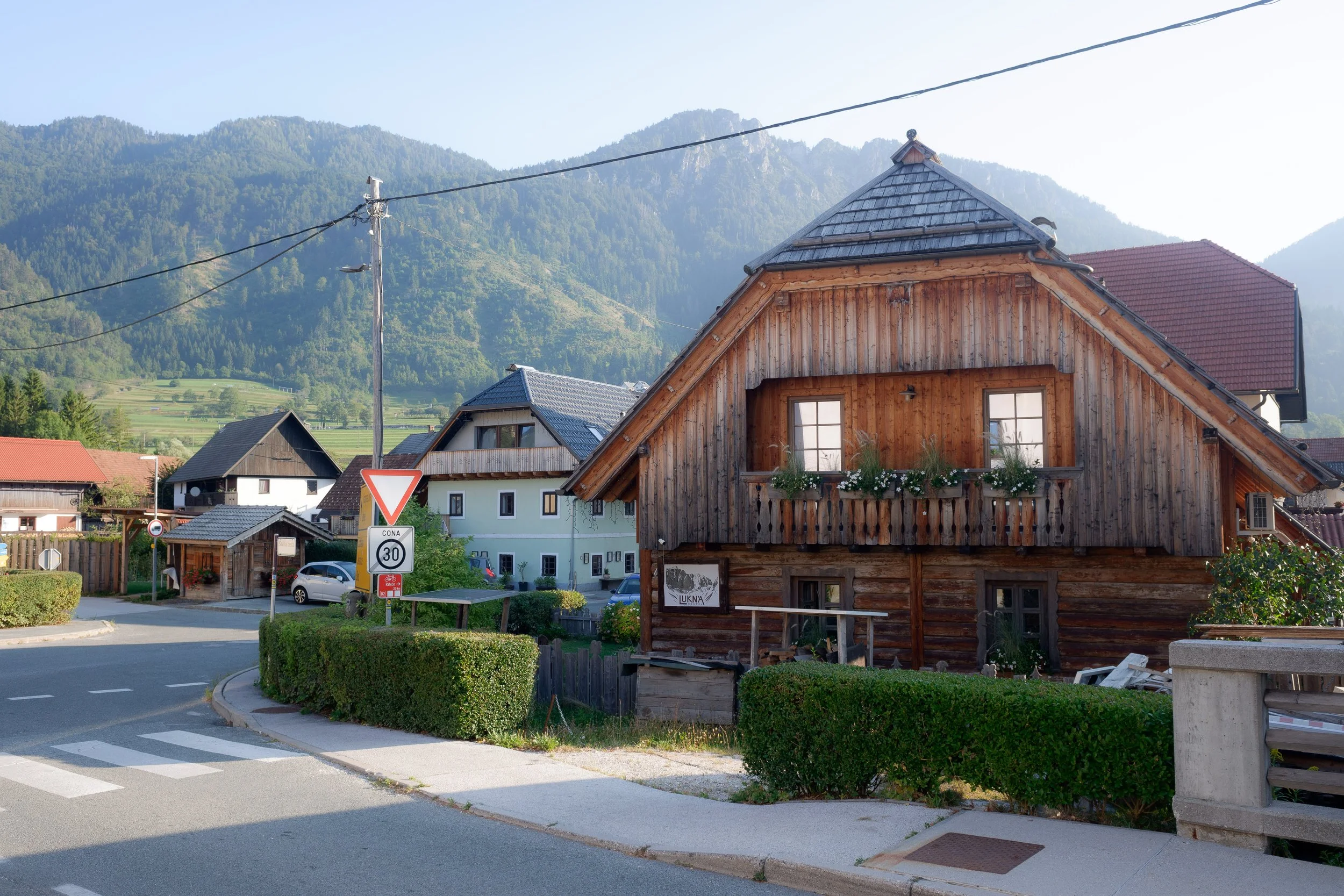
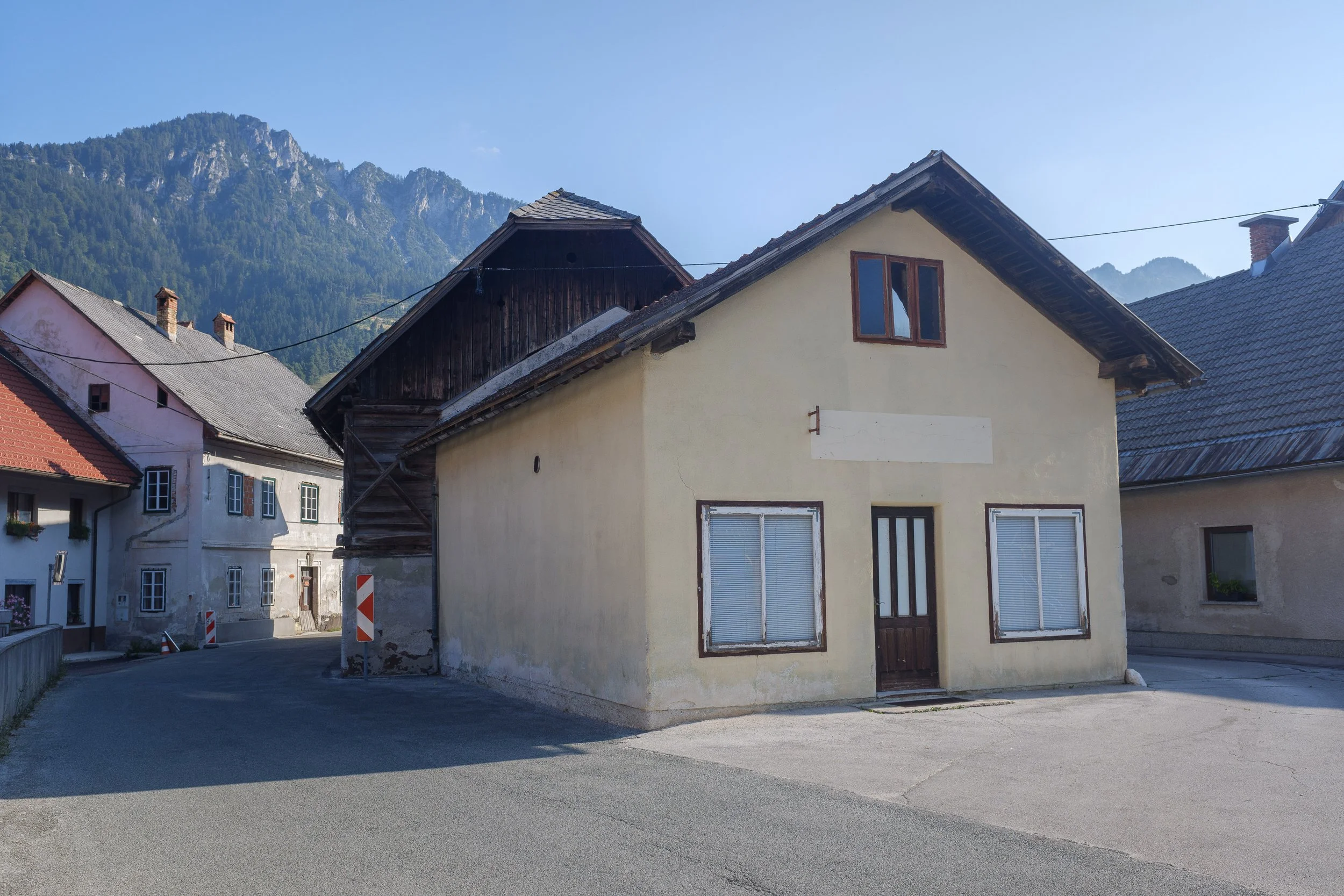
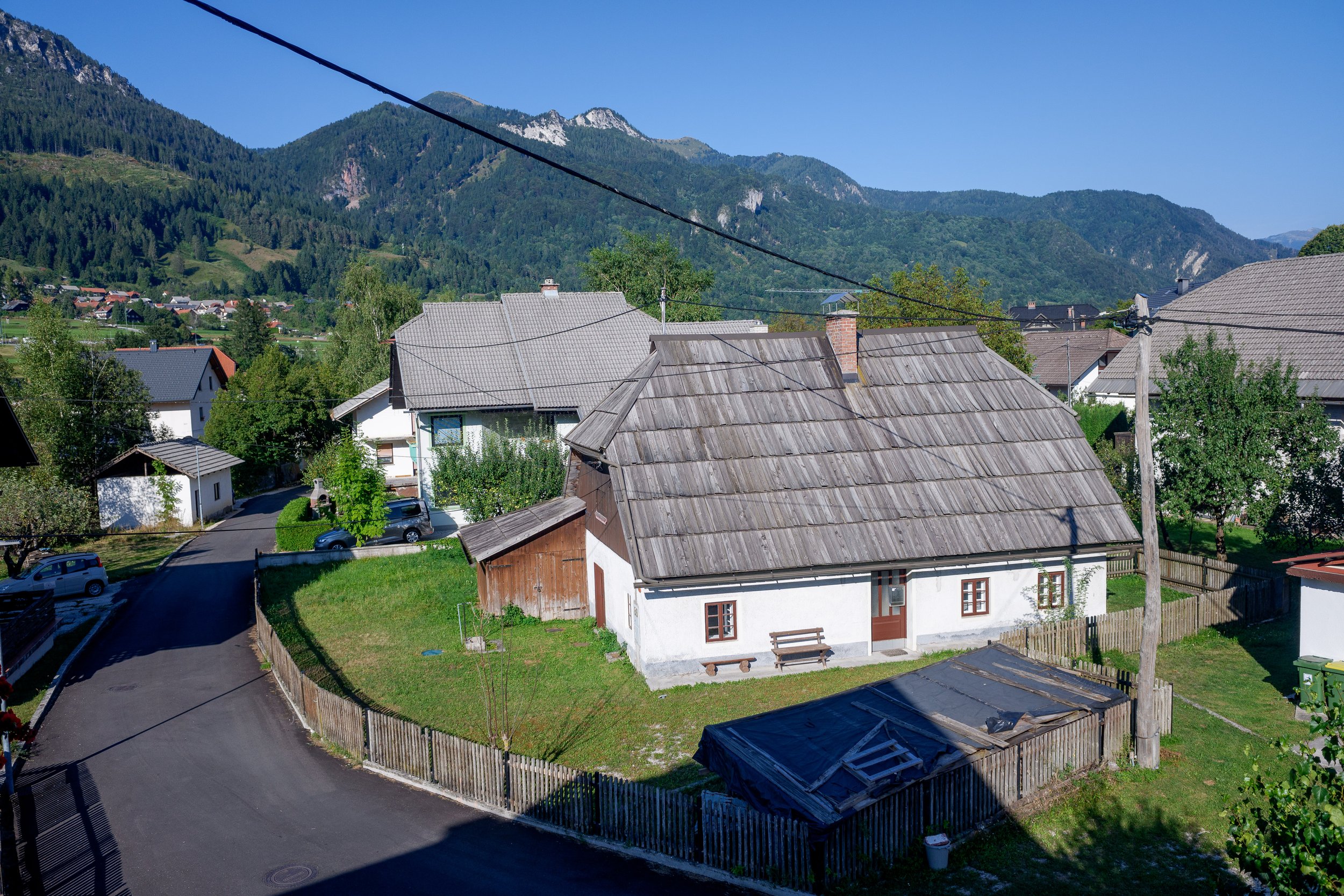
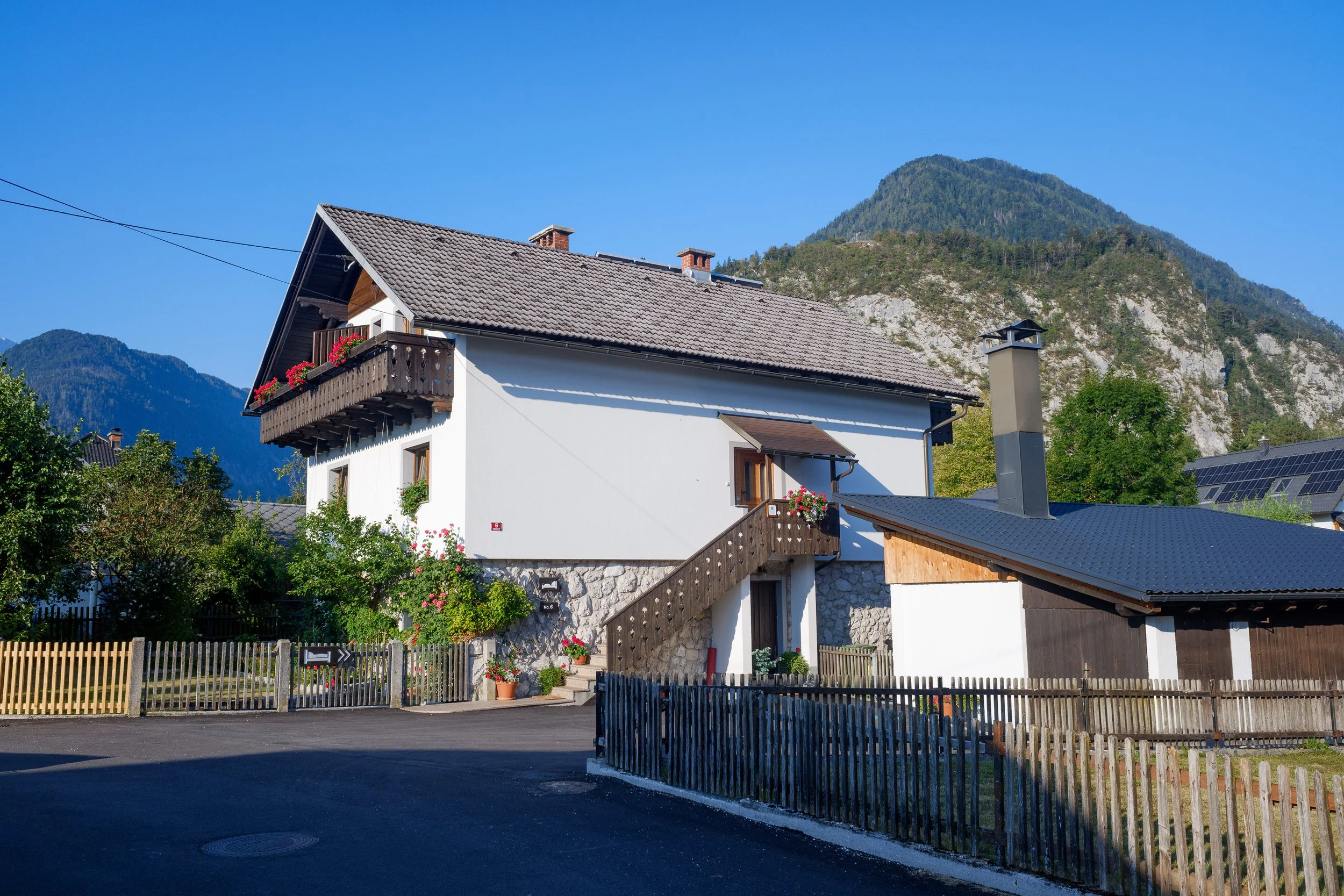
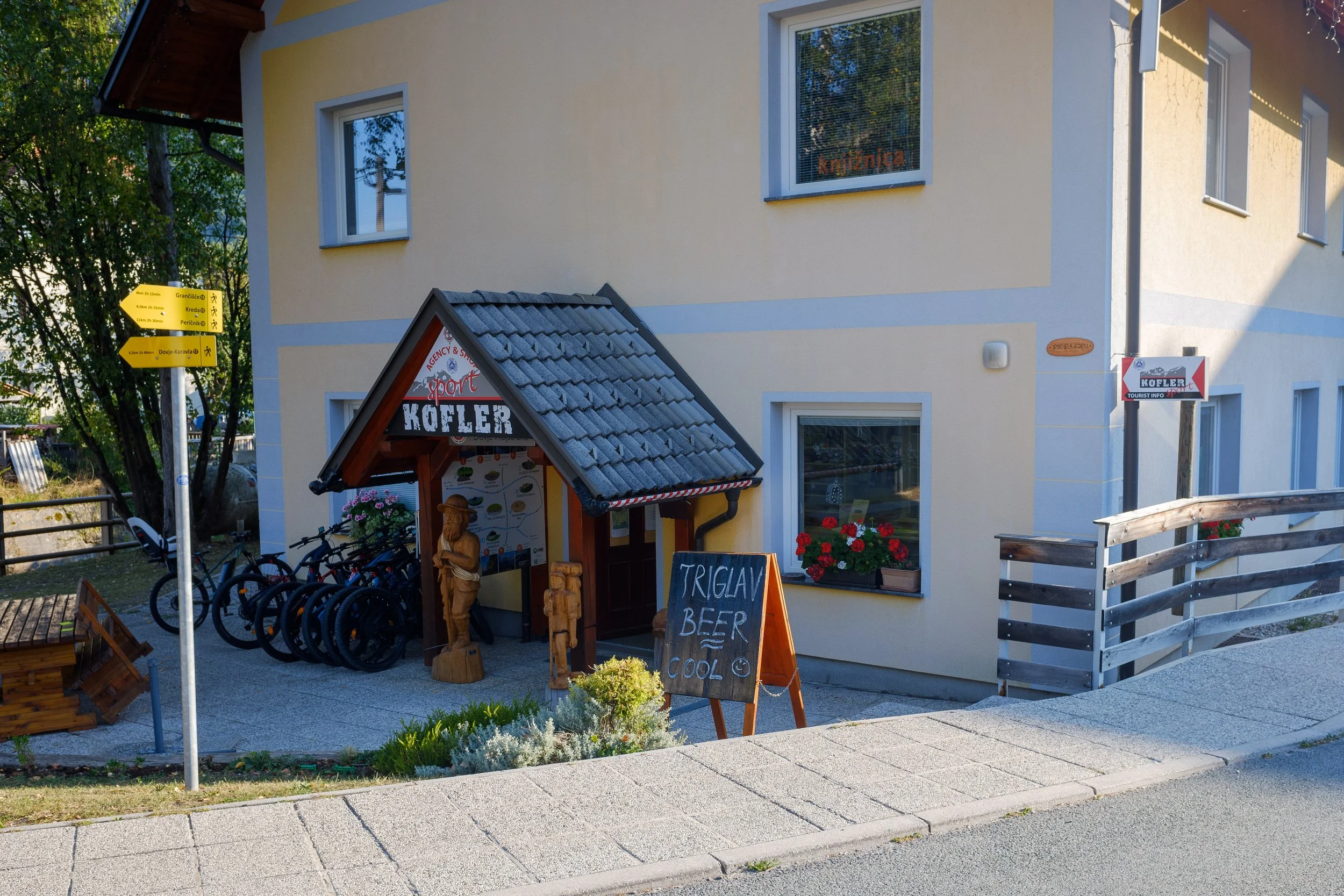
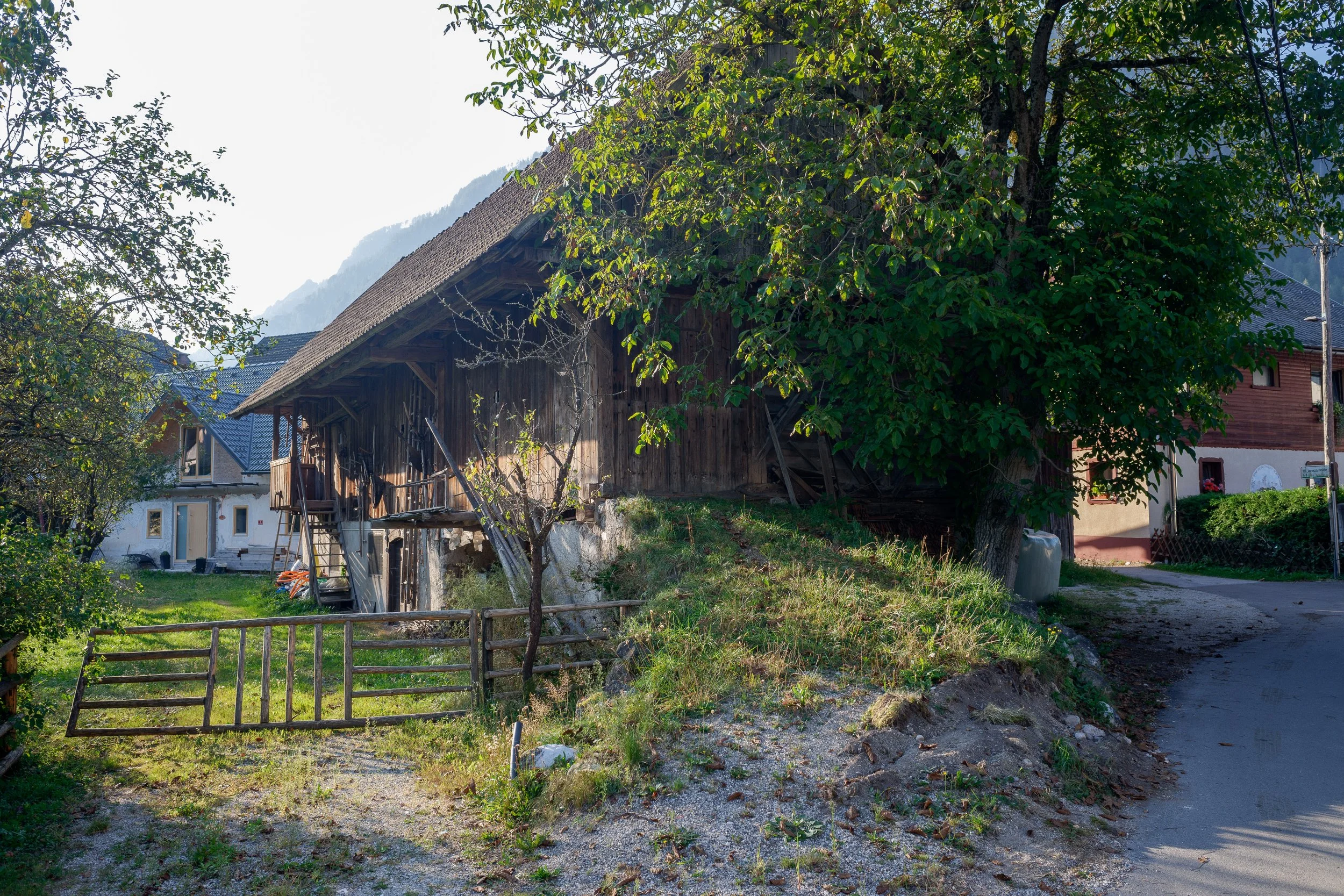
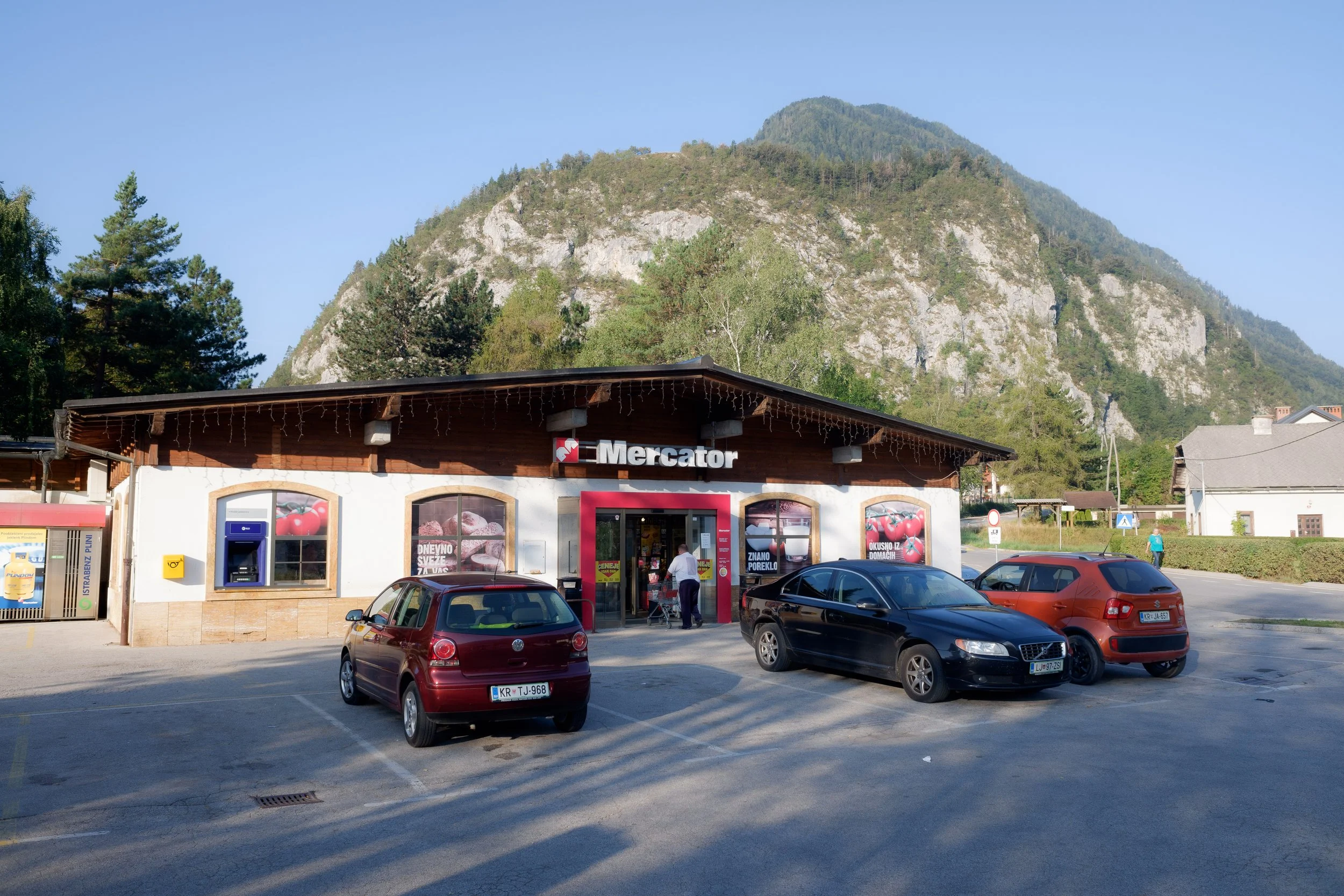
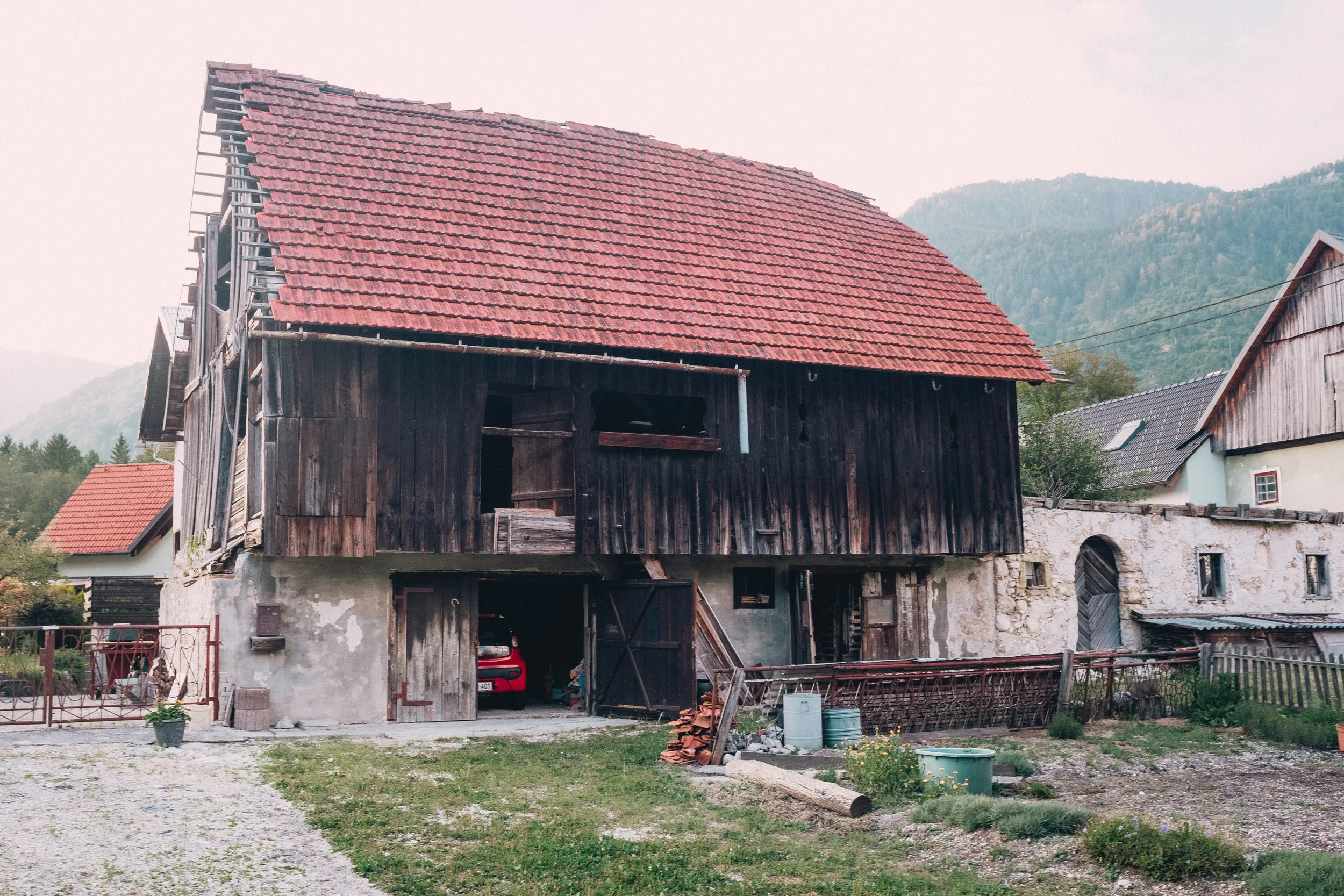
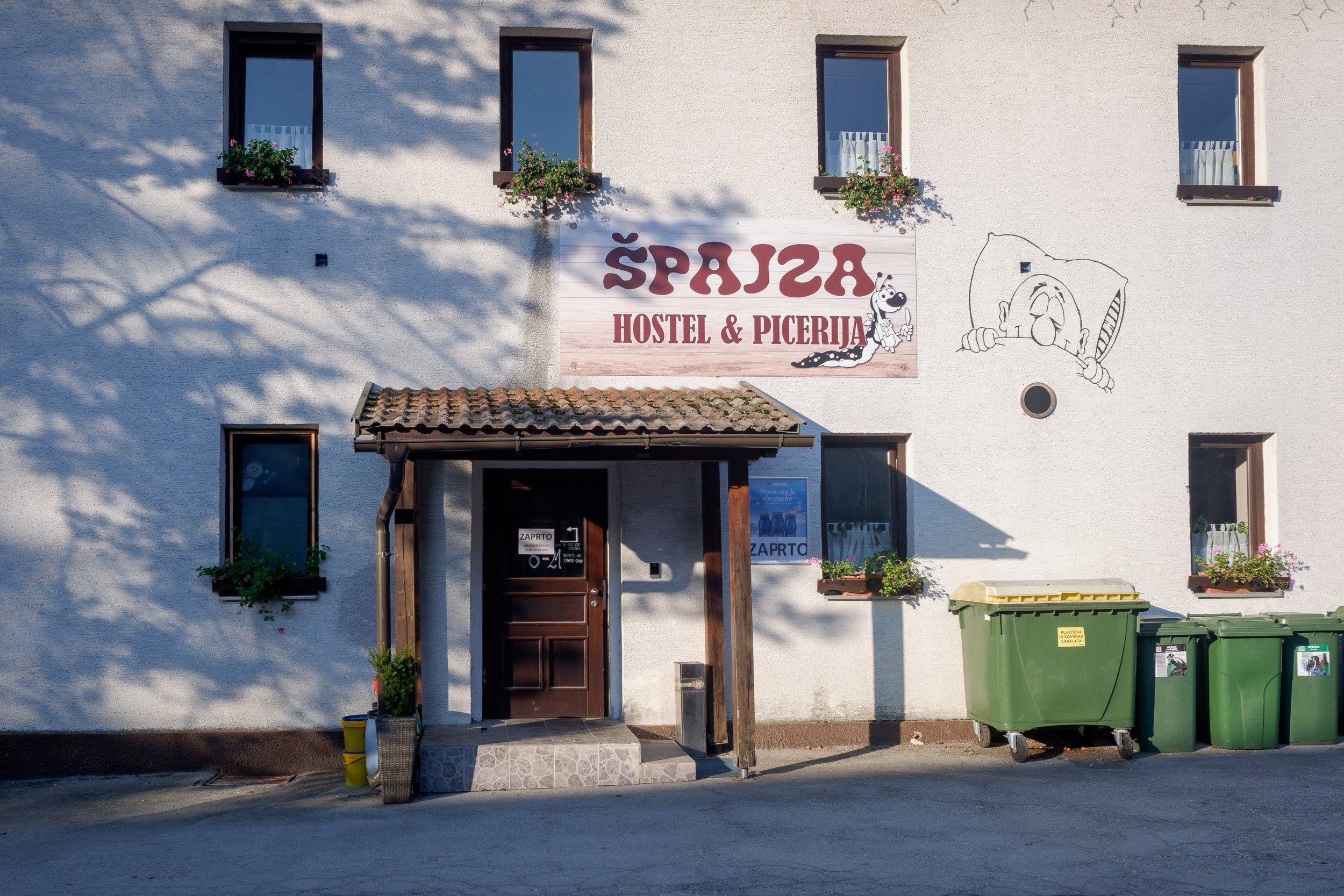
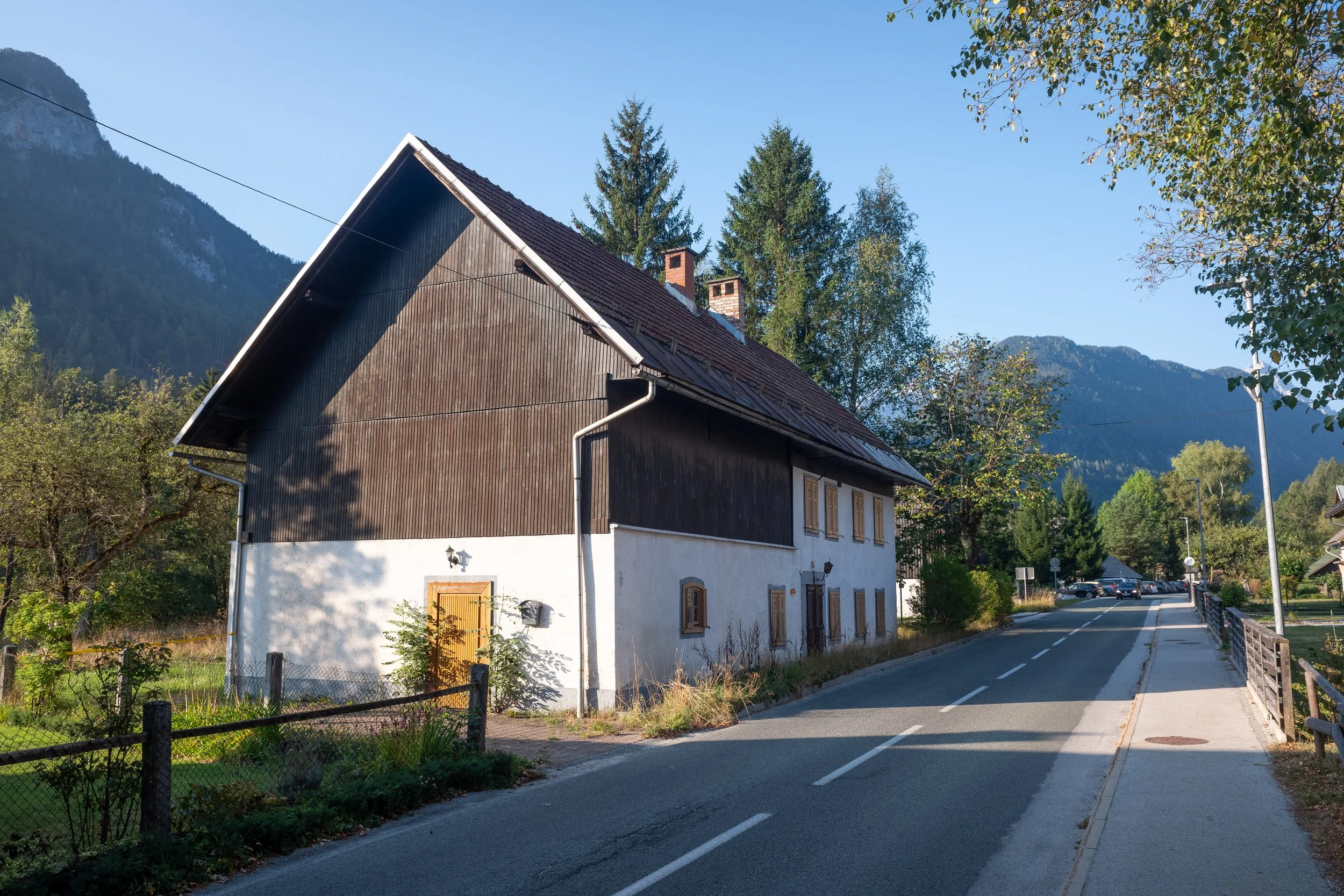
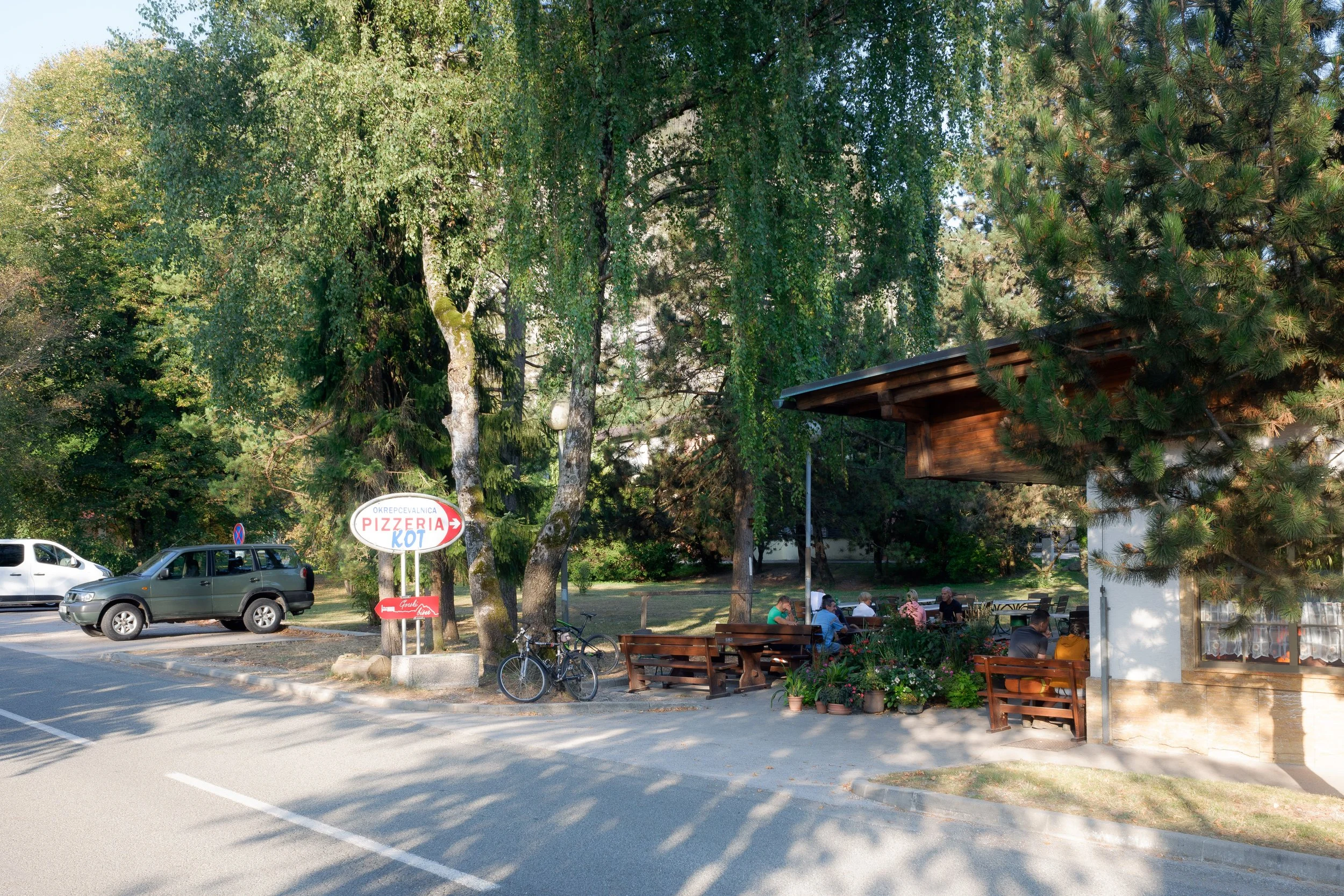
Those first days in Mojstrana gave us a chance to test out that pesky ankle of mine, between relaxing in the village, exploring the local town of Kranjska Gora, eating far too much ice cream, and watching the 2014 Christmas movie, Get Santa, that seemed to be on repeat throughout summer. Oddly enjoyable, even on third viewing.
A 20km walk along the valley floor went well, as did a test run up to a 2,077 peak called Sleme, so a couple of days later, we booked a night at Triglavski dom, a hut that sits near the summit of Triglav at 2,515 metres (more on that ‘joyful’ place later) got our packs sorted and set about planning our route from Mojstrana. While guidebooks are great, we spoke to a few locals and young rock climber at a store (Kofler Sport) in particular gave us a recommendation that turned out to be excellent, and was precisely the route we took.
I wish I could remember her name. I’d like to blame age, but I’ve always been terrible at remembering…well most things. The folk at Kofler Sport are a fountain of knowledge so do pop in if you ever find yourself in Mojstrana.
What Kit? Fast, Light, and Mildly Optimistic
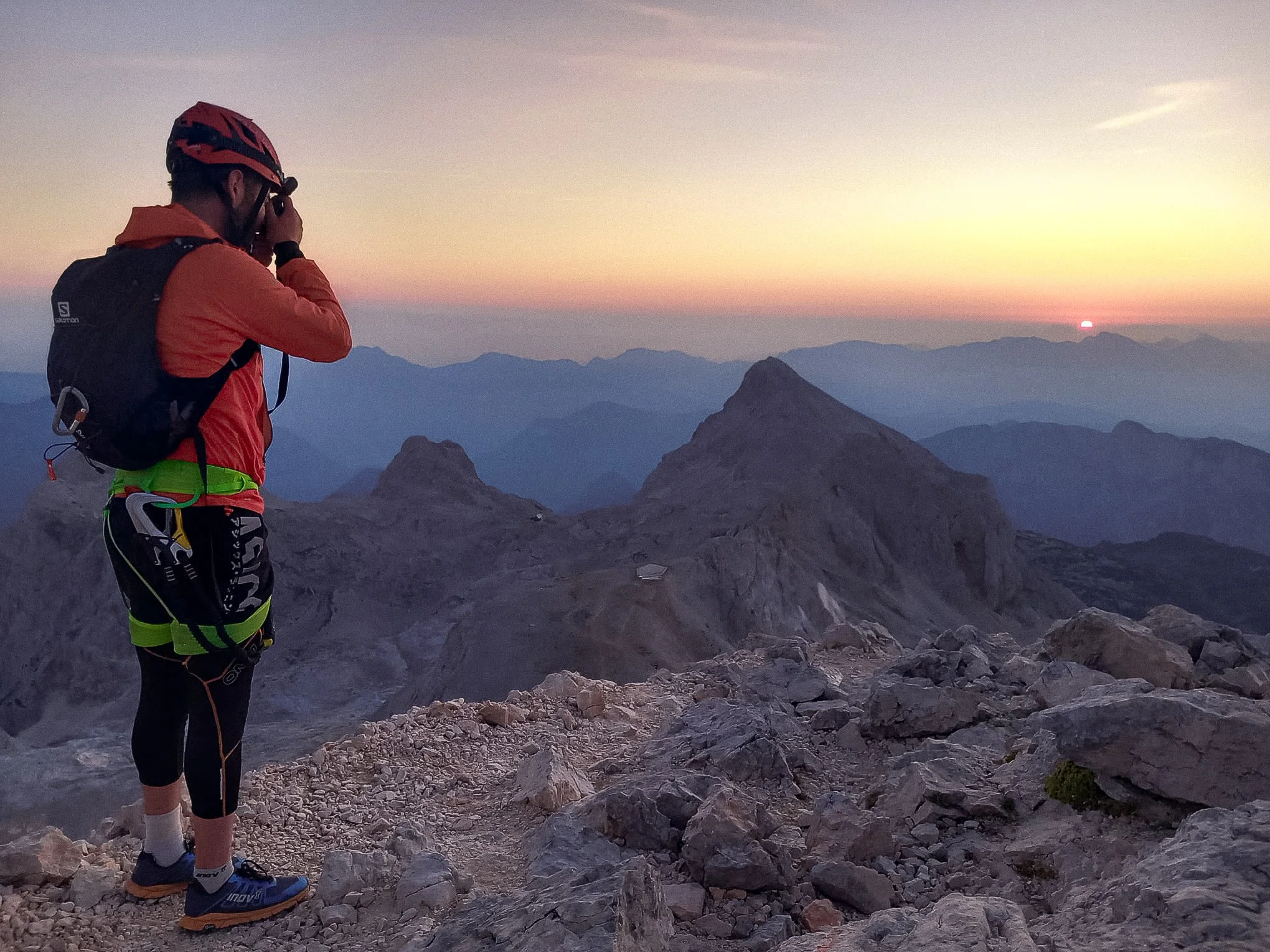
For our dash up Triglav, we went full fast-and-light, which is mountaineering code for ‘take only what you truly need and hope you’ve judged that correctly’. Twelve-litre fell running packs, a litre and a half of water each, one spare t-shirt and pants for day two, and enough snacks to convince ourselves we were being sensible. Add via ferrata gear, a super light harness, head torches, helmets, and hiking poles, and somehow that was deemed entirely adequate for two days in the high mountains.
With photography in mind, I took the brilliantly compact OM-5 paired with a single 12-45mm f,4 Pro lens. One body, one lens, no excuses. Every image here came from that tiny set-up, which is both reassuringly rugged and small enough that you can pretend you’re not carrying a ‘proper’ camera at all. It’s genuinely surprising what fits into a 12-litre pack when you’re motivated, organised, and perhaps just a wee bit stubborn.
Pitch One: The Vrata Valley Free Bus - Mojstrana to Aljaž Dom the Embarrassingly Easy Way
It’s pretty rare that any mountain day begins with a free bus ride back home, so this was a pretty excellent tip from our friend at Kofler Sport (still trying to remember her name…). It’s also something I think we could learn from in Cumbria as they’re really designed to reduce the level of traffic into the valley. Wasdale, Kentmere, Langdale, and the Newlands Valley spring to mind here. As it turns out, there was also another free bus that we used to go between Mojstrana and Krasna Gora.
Free valley buses are brilliant because they swap 200 stressed drivers playing alpine bumper cars for one calm driver who actually knows where they’re going and what they’re doing. At the end of the day, fewer engines revving in a narrow mountain valley is no bad thing, for your nerves (well mostly mine), the wildlife, and the poor souls trying to reverse rental cars on a single-track road. Alpine-based schadenfreude anyone?
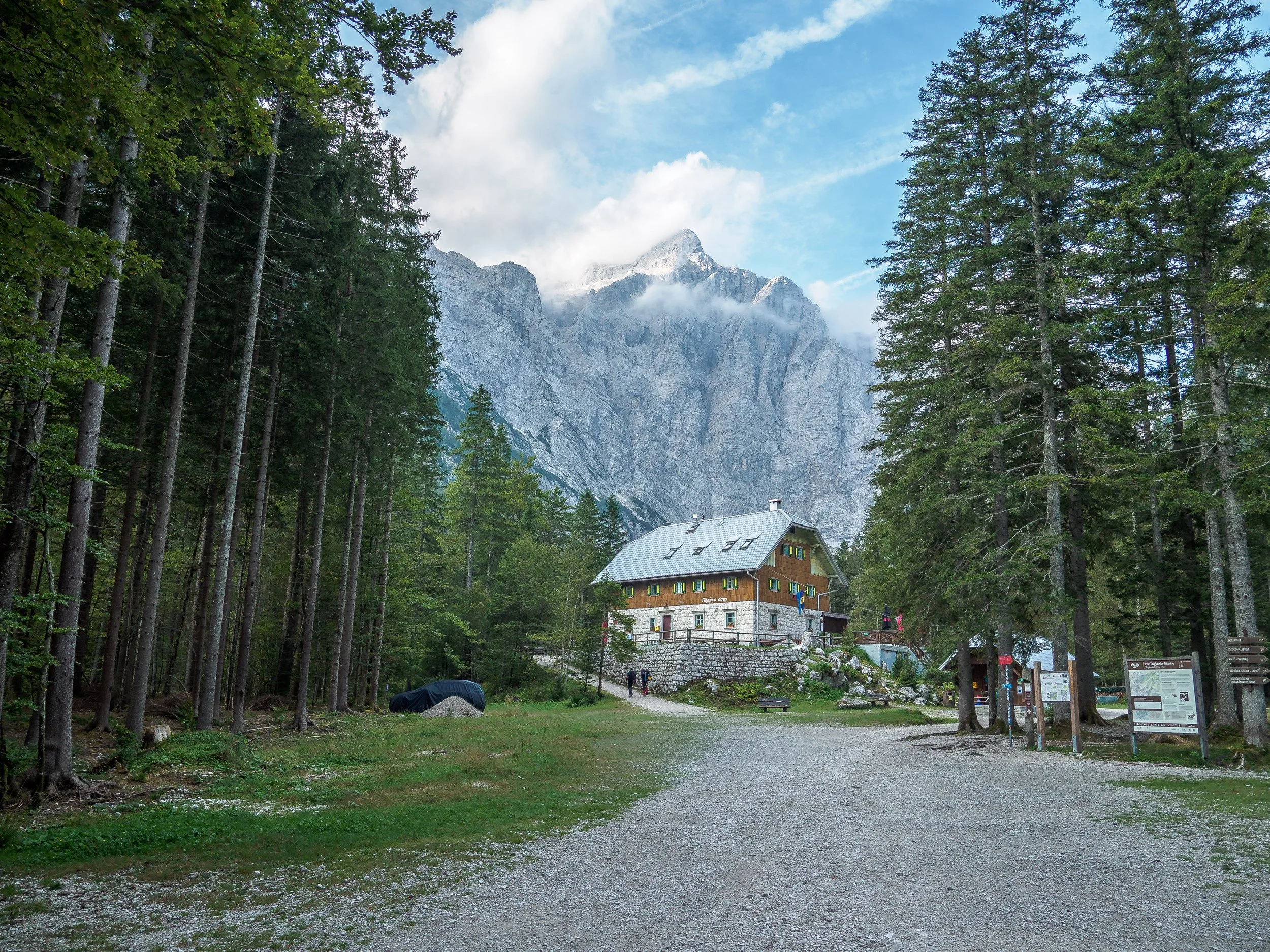
We picked up the free bus outside the small supermarket in Mojstrana around 5:20am which saved us around 12km of hiking as it slowly made its way to the head of the Vrata Valley where Aljaž Dom (hut) sits. And what a stunning alpine scene it is. Towering trees surround the hut while mountains sit to the north. It was far too early in our trip to justify ducking inside for coffee and a Hobbit-esque second breakfast, tempting though it was. Instead, we shouldered our small packs and walked past, knowing that Aljaž Dom would essentially be our finishing line the following day. A cold beer and sturdy wooden bench waiting patiently before the bus carried us gently back down to Mojstrana.
Pitch Two: Aljaž Dom to Triglavski dom via the Tominsek Route
Leaving Aljažev Dom we headed straight for the imposing wall above, picking up the Tominšek Route as it threads its way towards Triglavski Dom. If the bus had felt civilised, this was the moment things became properly alpine. Our unnamed (well un-remembered) guide had stressed that this was an excellent route to take. She wasn’t wrong. The Tominšek route wastes little time. Forest gives way to rock, the path steepens, and before long you are clipping into steel cables and hauling yourself upwards through slabs and chimneys. The signs suggested it was a six or seven hour hike and that turned out to be about right, maybe a little more due to me not wanting to push my ankle too fast.
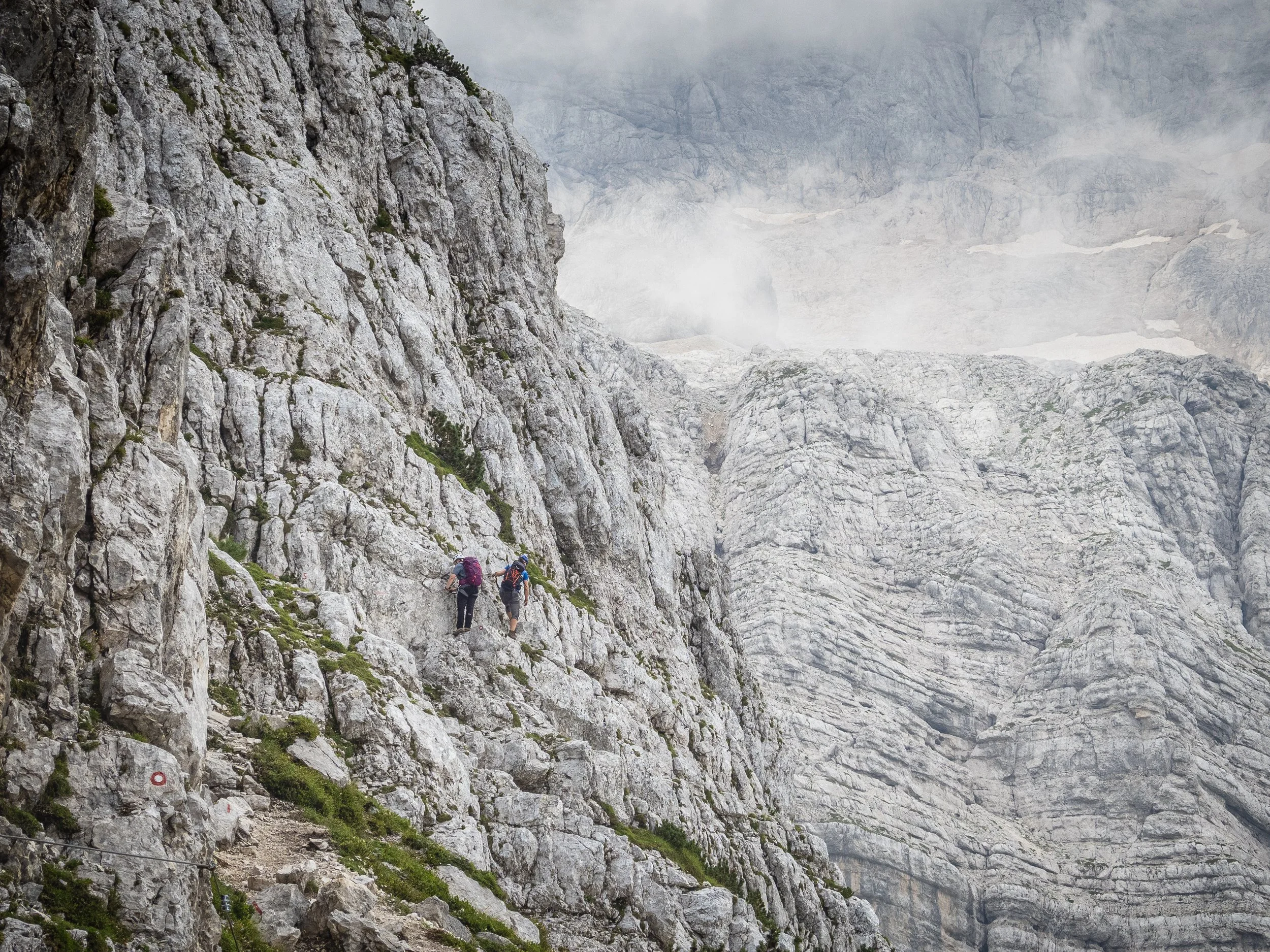
The early section of the route is largely alpine hiking. Nothing technically difficult here but it was tough going due to the steepness of the route. Poles sure helped. The second section of the Tominsek Route is where the via ferrata really comes into play (and this was, by far, the most enjoyable part of the route). It isn’t technically difficult, but it is sustained. With plenty of air below your boots, it demands a wee bit of focus, a steady rhythm, and a healthy trust in small iron rods hammered into pale limestone at some point in the past. Helmets on, lanyards clipped, poles stashed, this was where the fast-and-light philosophy met actual vertical terrain, and here it really comes into its own. To be able to move freely, with clean footwork, and nothing bulking out your pack, it becomes so enjoyable drift across the via ferrate sections of the route. That simplicity is no bad thing, especially when gravity is doing its quiet best to remind you who’s really in charge.
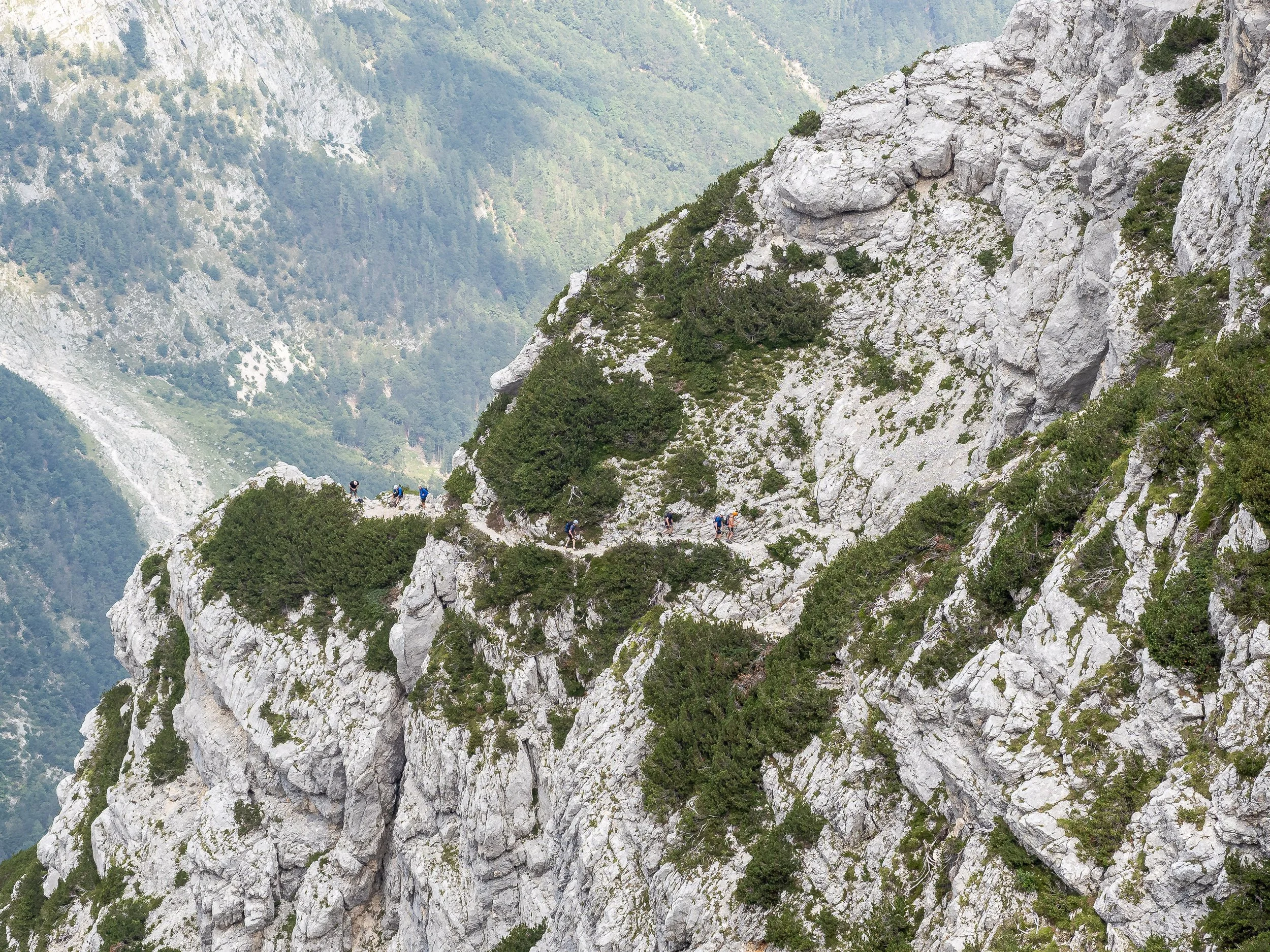
This stretch was probably the toughest for me. The terrain shifts into a mix of scree, awkward boulder fields, and lingering patches of snow that feel just unstable enough to keep you honest. It’s the sort of ground that requires attention rather than strength, and I was very aware that this was precisely the kind of uneven, shifting surface where my recently twisted ankle might decide to lodge a formal complaint. Here Nayeli really took the lead in effortlessly navigating through this which mostly involved finding the small red arrows painted onto the rocks. This meant I just had to be slow, sure footed, and follow my wee, Mexican guide. As we approached the hut that would be our home for the night, we decided to take half an hour to rest and enjoy the view before progressing. There’s something deeply satisfying about stopping just before the finish. The pressure is off, the climbing is done, and the hut, though not yet reached, is close enough to feel like you’re there. We sat on warm limestone, quietly taking in the vast, pale plateau around us and the higher ridges rising towards Triglav.
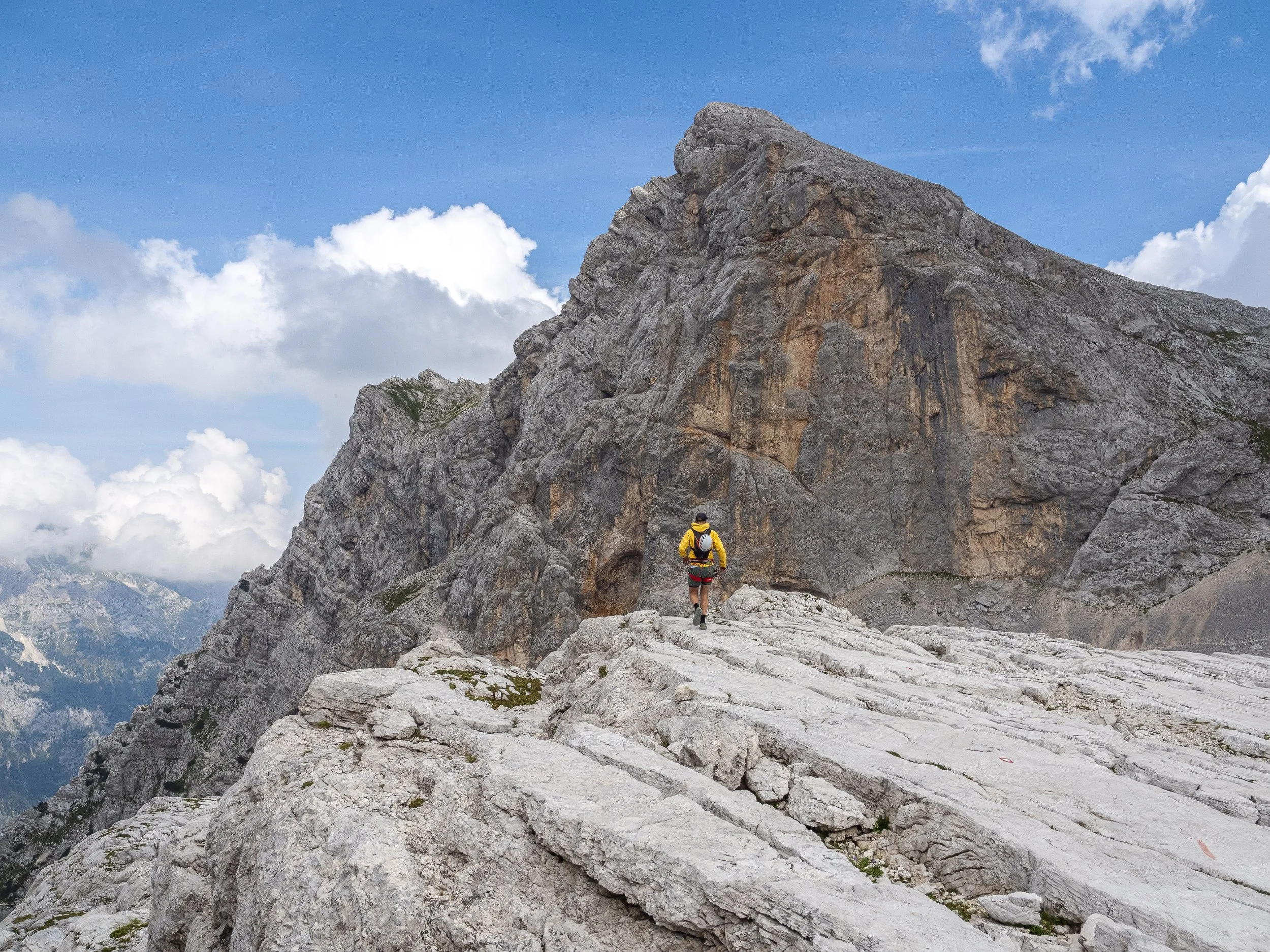
Pitch Three: Triglavski dom –Financially Significant Hydration: Dude, Where’s my Glacier?
Well, this place was a mixed bag! Head over to TripAdvisor and you’ll find views that really divide opinion – mostly centred on rude staff and unreasonable prices for food and especially water. Angry stuff like that. With my university hat on, I confess that I spent far too much time reading thinkers such as Edmund Husserl, Martin Heidegger, and Maurice Merleau-Ponty philosophers (strictly phenomenalists) who studied how the world is encountered, felt, and made meaningful in first-person experience. Phenomenology, that is, gently reminds us that we all inhabit our own slightly peculiar version of reality, which is precisely why trusting a TripAdvisor review is a risky affair. Phenomenology teaches us that we each encounter the world through our own fragile expectations, which is why one guest’s ‘unforgivably rude staff’ is another’s ‘efficient alpine directness delivered before coffee at 2,500 metres’.
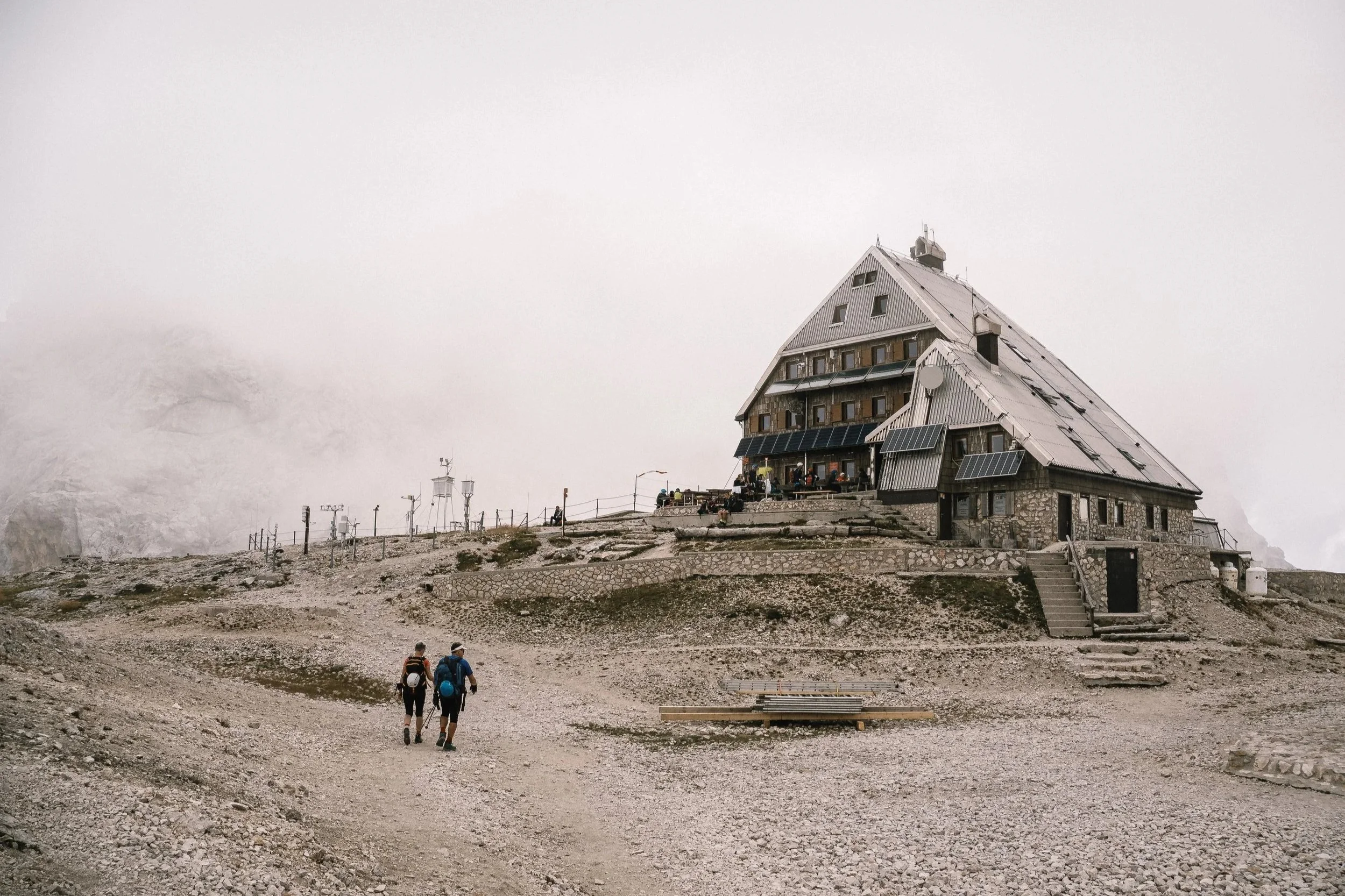
The hut was a good size, bunk beds were packed in tightly, the choice of food was pretty limited (mainly cabbage soup and sausages), and the staff were often short (but were certainly overworked). But this is mountaineering. But this is mountaineering. Perspective shifts at 2,500 metres. From where I stand, this is precisely the sort of luxury I often fantasise about when soaked, cold, and slightly miserable somewhere in the mountains of Europe. The idea that when I’m hungry someone appears with hot food, and when I’m tired I don’t need to wrestle with tent poles in the wind, makes it remarkably easy to overlook tight bunks and limited menus. At altitude, forgiveness comes more naturally. The biggest problem I observed was that hut was clearly struggled to cope with was water in all its forms and needs.
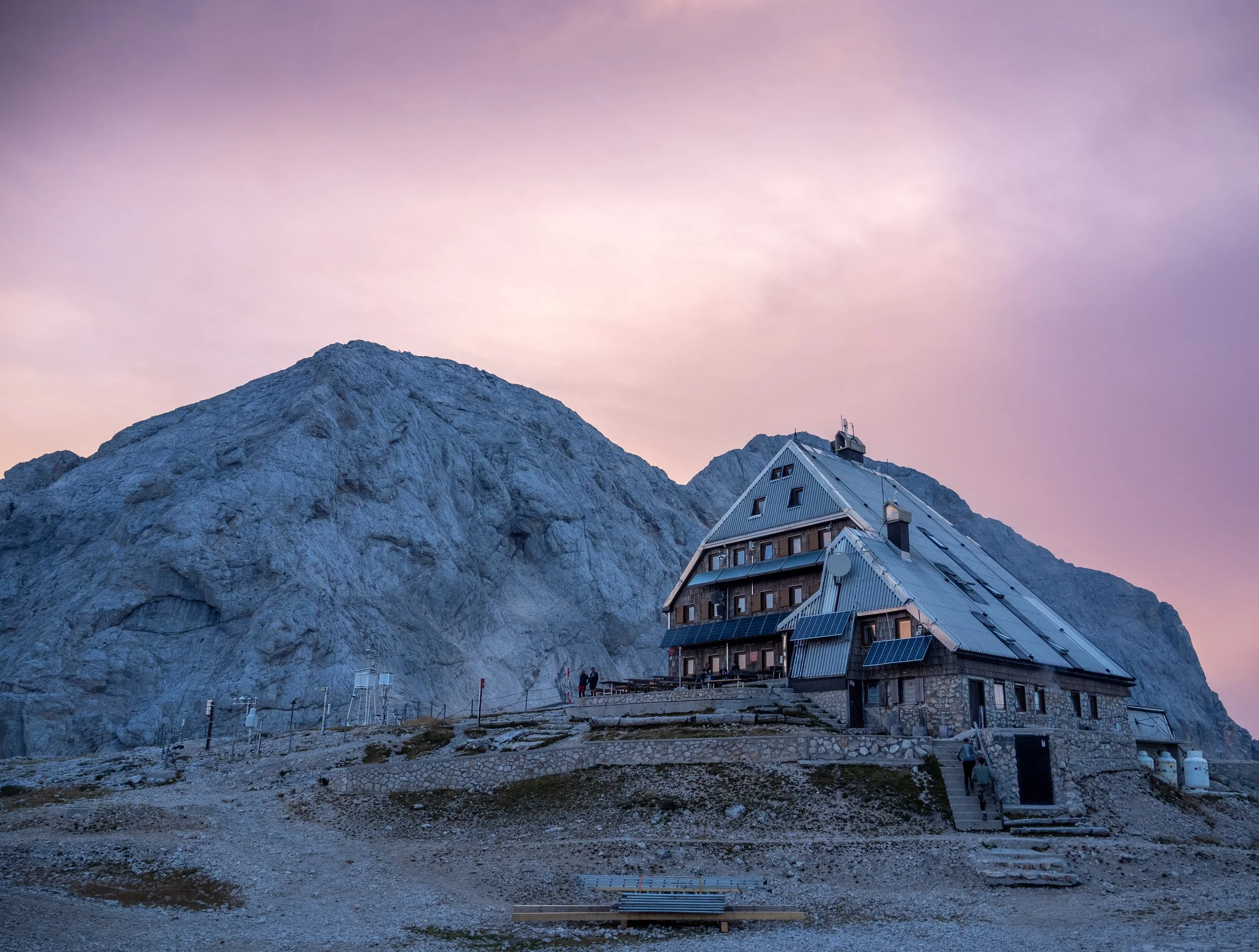
Showers weren’t really a thing, toilets pragmatically emptied into a large tank without being flushed away, and drinking water was bottled and expensive. Six litres cost us £24 which was pretty painful for something that was free down at Aljaž dom just a few hours ago. Why such a stark difference? In a nutshell, climate change.
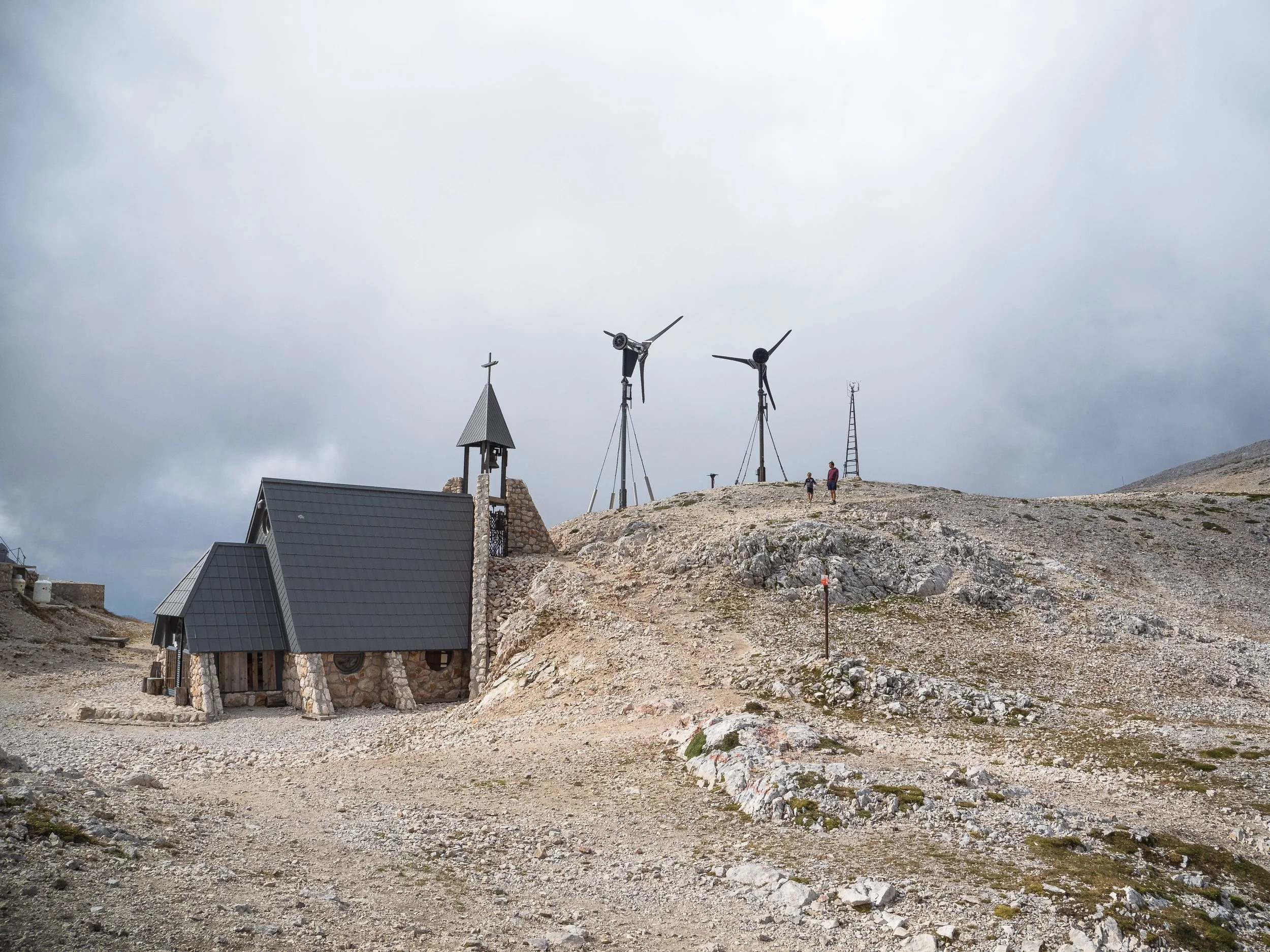
Outside of the hut a small display shows how big the glacier on the north face of Triglav used to be. It shows how in the nineteenth century it stood at 40 hectares (), today it’s less than a single, solitary one. For so many huts in the recent past, much like this one, melt water from the surrounding glaciers provided just about all it needed. Of course, water would still need to be stored and managed, but this was never so much of a logistical issue. Today pretty much all water needs to be flown in by helicopter, in plastic bottles. This is hardly cheap (and certainly not so ecological) and helps explain the prices of hydration at Triglavski dom.
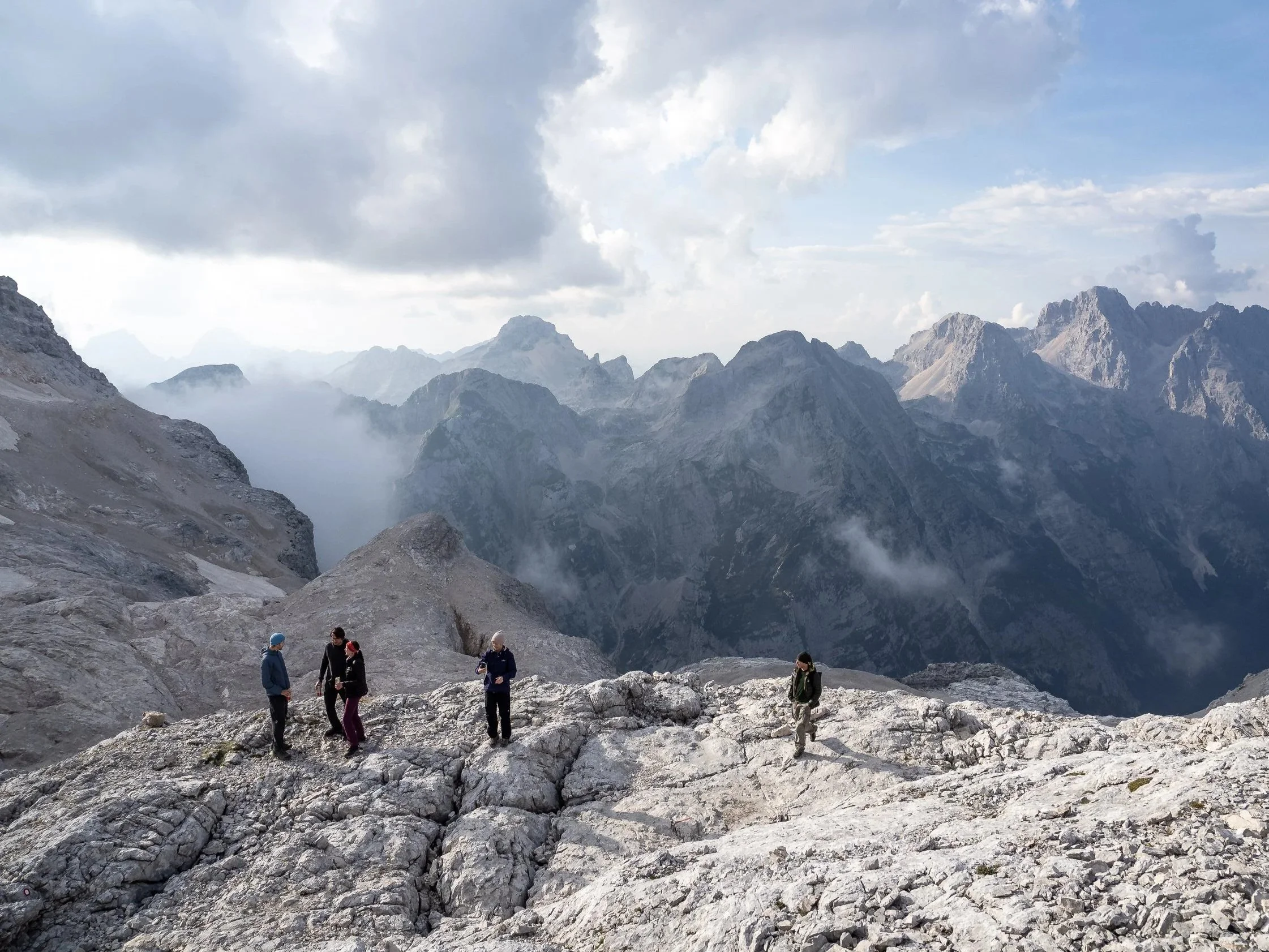
In the end, Triglavski dom is a reminder that mountains quietly rearrange our expectations. What feels overpriced or abrupt at sea level takes on a different meaning when every sausage, every bottle of water, and every bunk plank has been hauled, flown, or carried into thin air. It is easy to grumble; it is harder, and perhaps more honest, to notice the fragility of the whole enterprise. The retreating glacier beneath Triglav is not just a backdrop but a warning. If the cost of water feels steep, it is because the true price is being paid elsewhere, slowly, in ice.
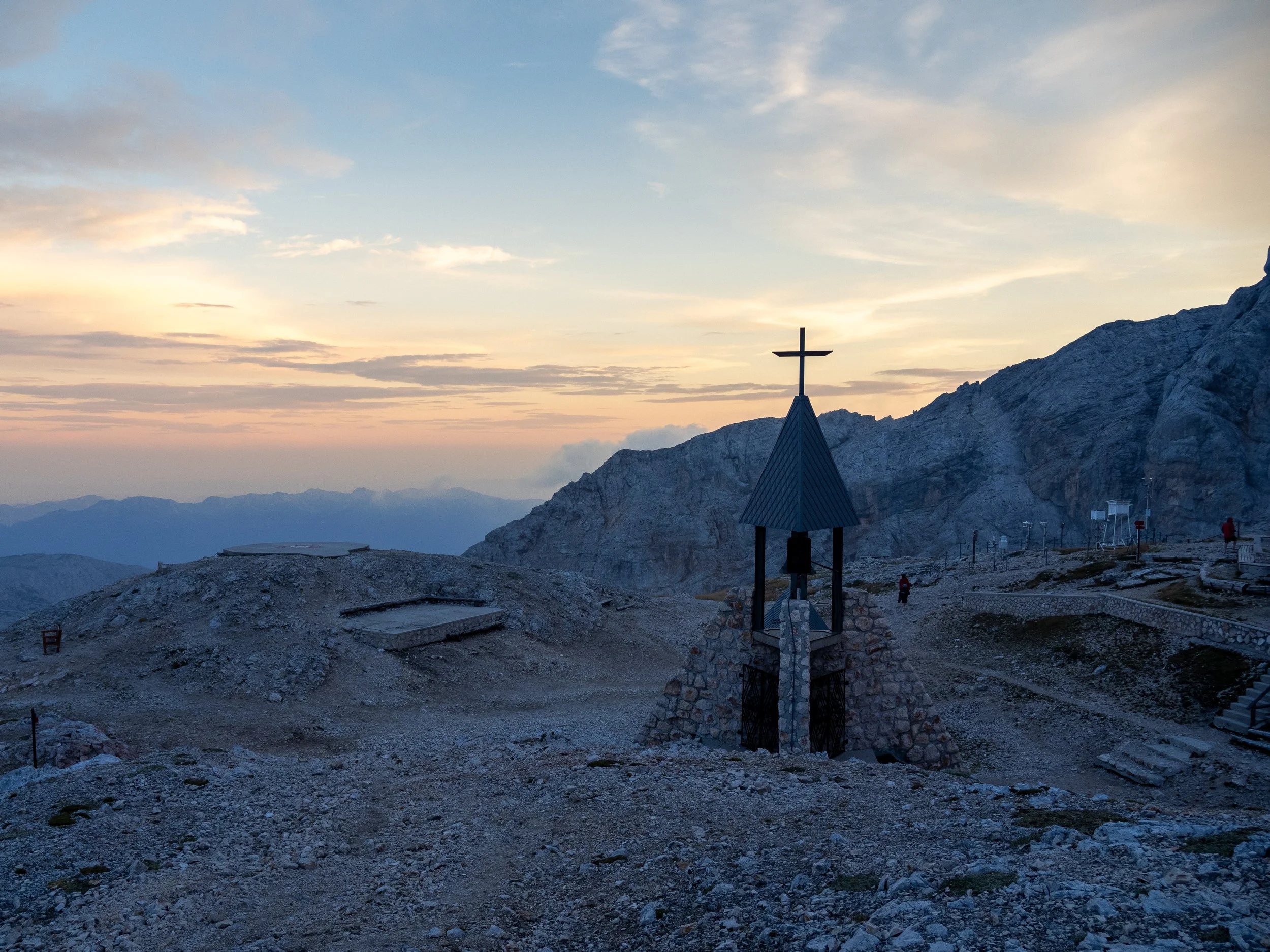
Pitch Four: Triglavski dom to Triglav Summit – Vertical via Ferrata Heaven.
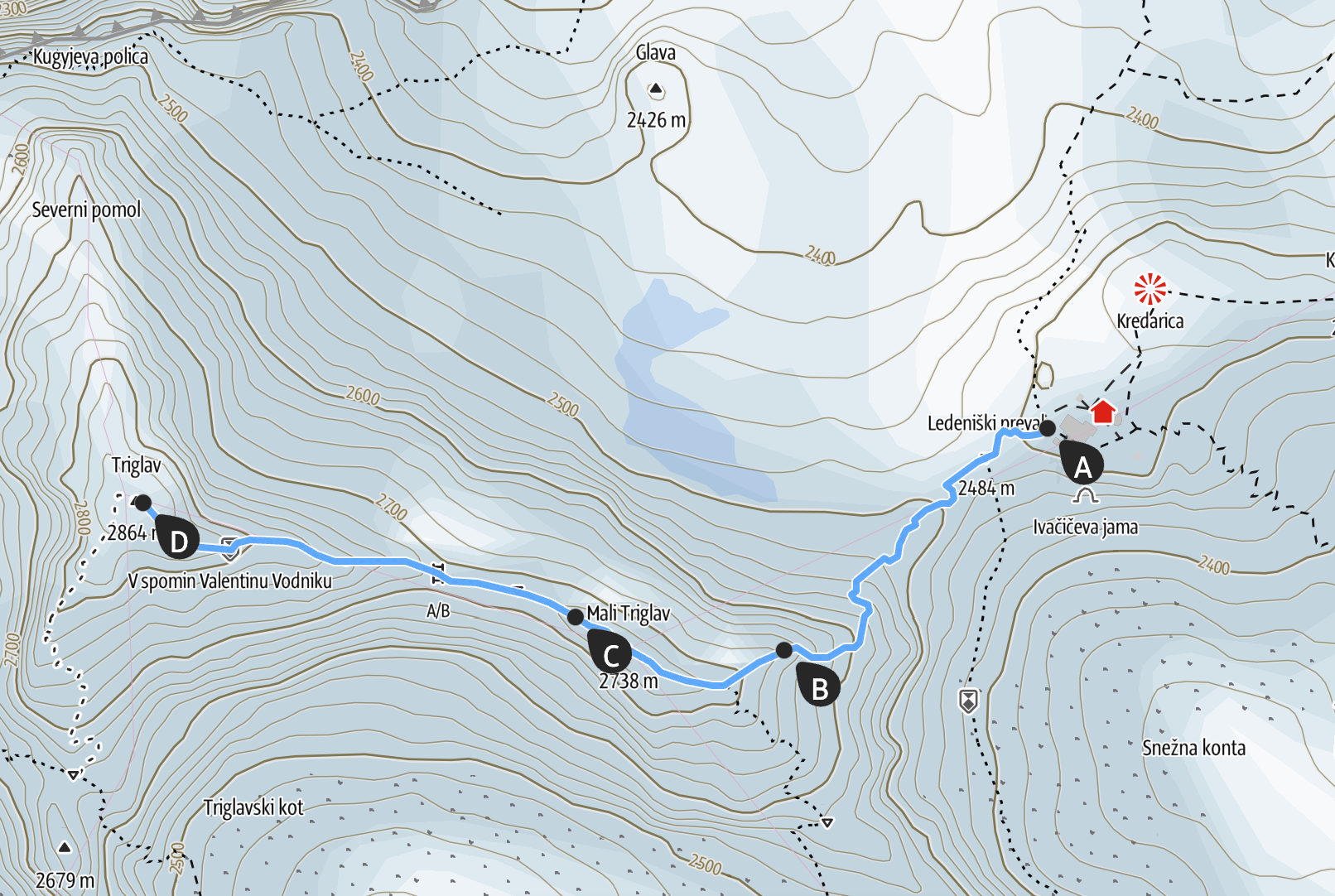
With an alarm set for 4:50am and a 5:30am start, we were aiming to be on the summit of Triglav by around 7:00am. I am not, by nature, an early morning person, but mountains seem to suspend the normal rules. For this wee summit push, however, there was no time for civilised behaviour, no coffee, no hot breakfast, just water, bread, and meat, which felt less like breakfast and more like a mildly grim medieval ration. The plan was to be back at Triglavski dom by around 9:00am, in time for a proper breakfast and, ideally, something hot in a cup.
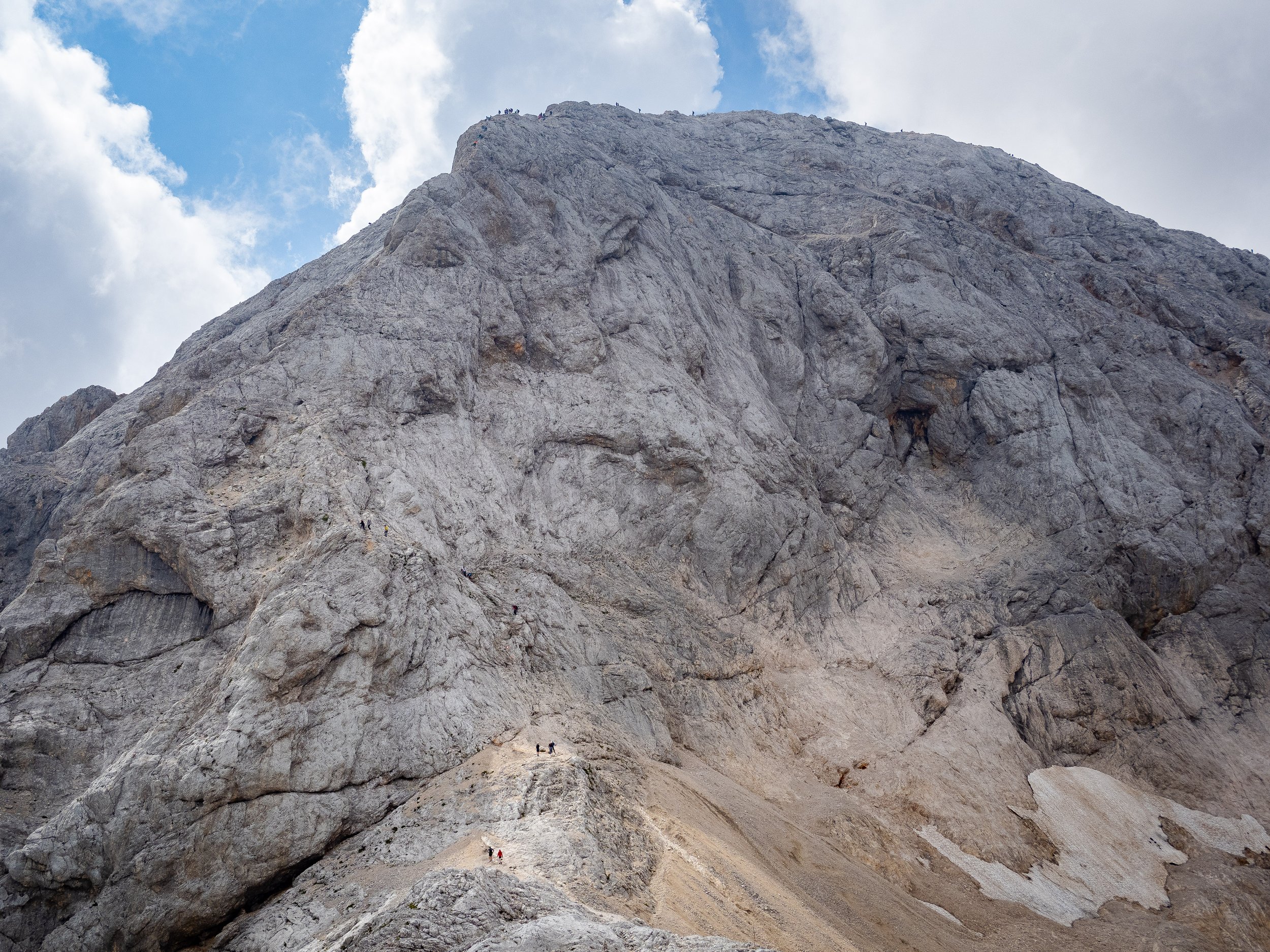
Given that the elevation difference between Triglavski dom and the summit is only 349 metres, the early start might seem a touch dramatic. But in the Alps, habits exist for good reasons, and starting early is no bad thing if you want to avoid spending too long moving in the hotter part of the day. We were also keen to catch sunrise while moving along the via ferrata and to reach the summit in that soft, early light, which can make even mildly anxious scrambling feel almost serene.
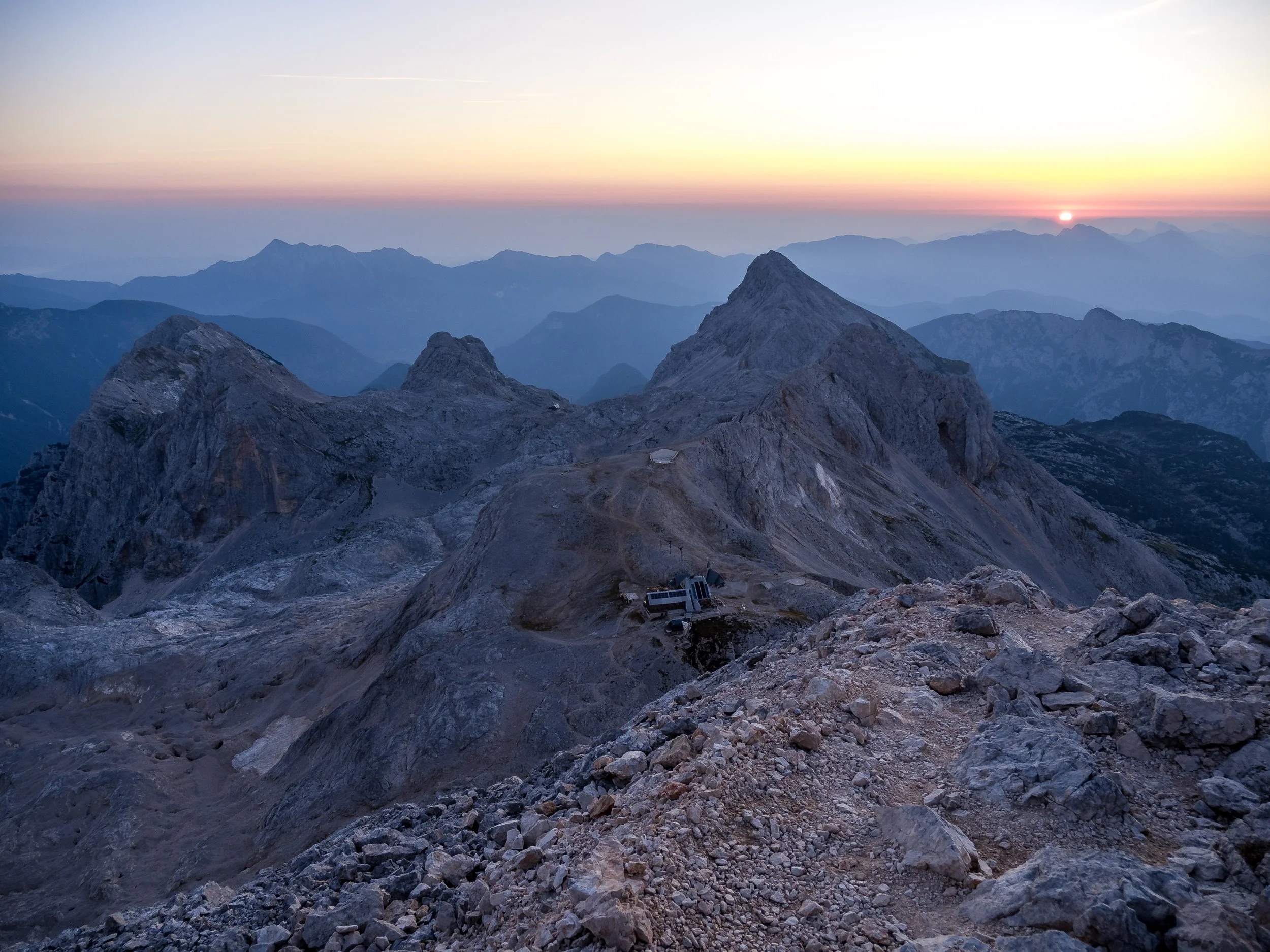
With head torches on, we set off up Triglav’s north side via Mali Triglav, with roughly sixty per cent of the route made up of via ferrata cables and bolts. The opening section packs in around 250 metres of fairly significant ascent, and a lot of fun. If you have even basic climbing or bouldering skills, the whole thing feels more joyful than intimidating, with no section presenting much technical difficulty in good conditions.
Oddly, perhaps given Triglav’s reputation for mood swings, we were blessed with beautiful light, no rain, and very little wind, so conditions were just about perfect. I’m sure that in different weather the polished holds would feel a good bit more taxing, especially with exposure added into the mix. Still, one can only speak from experience, and in these conditions, we were very much in our element.
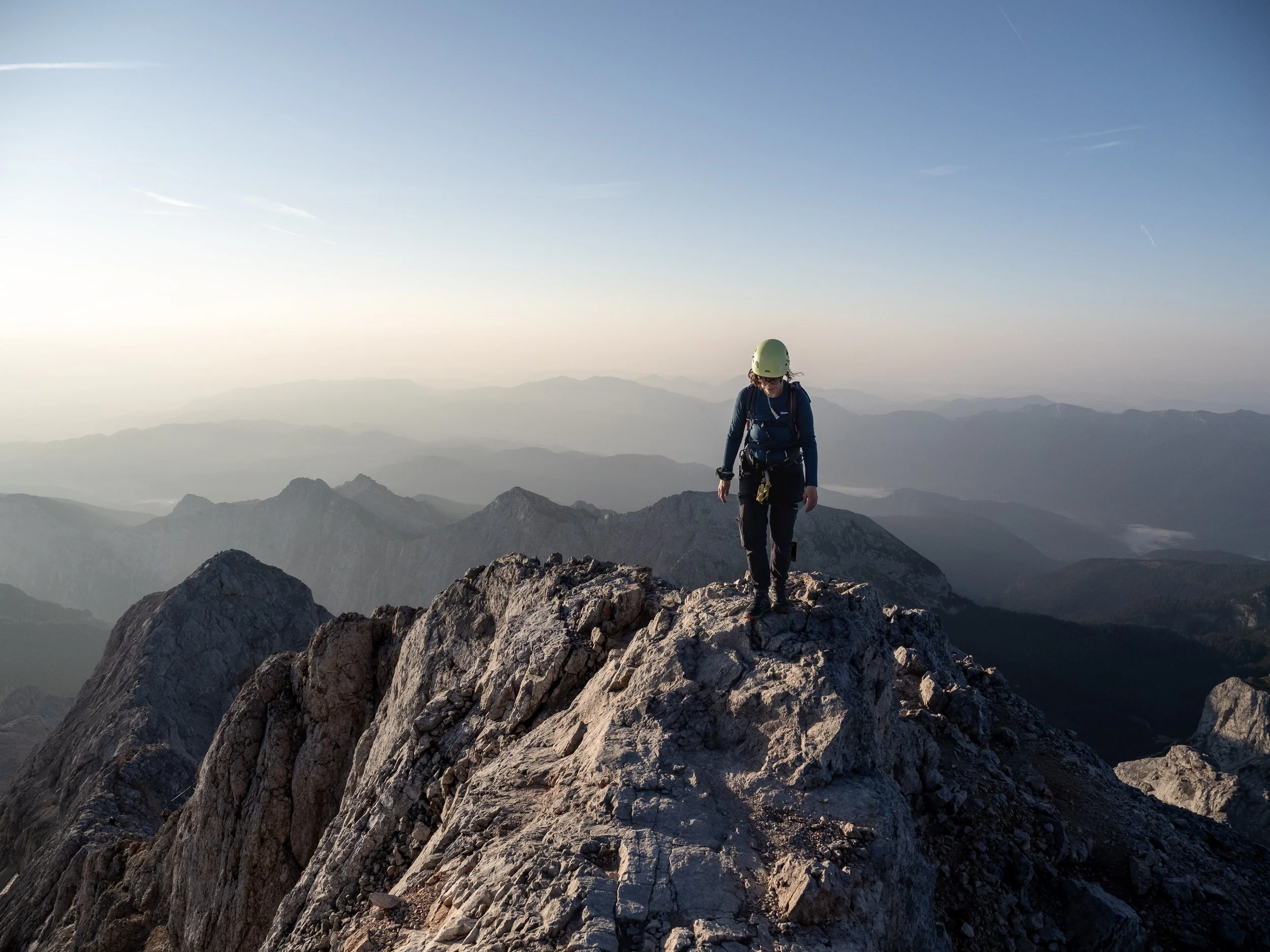
Once on the formidable ridgeline that makes a beeline for the summit of Triglav, there is really very little left to do, at least in the comforting sense that there are only around 100 metres more of elevation to gain. This sounds wonderfully manageable until you remember that those 100 metres are spread across roughly 800 metres of airy ridge, with sizeable drops falling away on both the north and south sides. To put it plainly, it is not the sort of place for careless footwork, philosophical distraction, or any sudden desire to check your phone. Still, the route is very clear, the via ferrata infrastructure is superb, and in good conditions it feels more exhilarating than alarming.
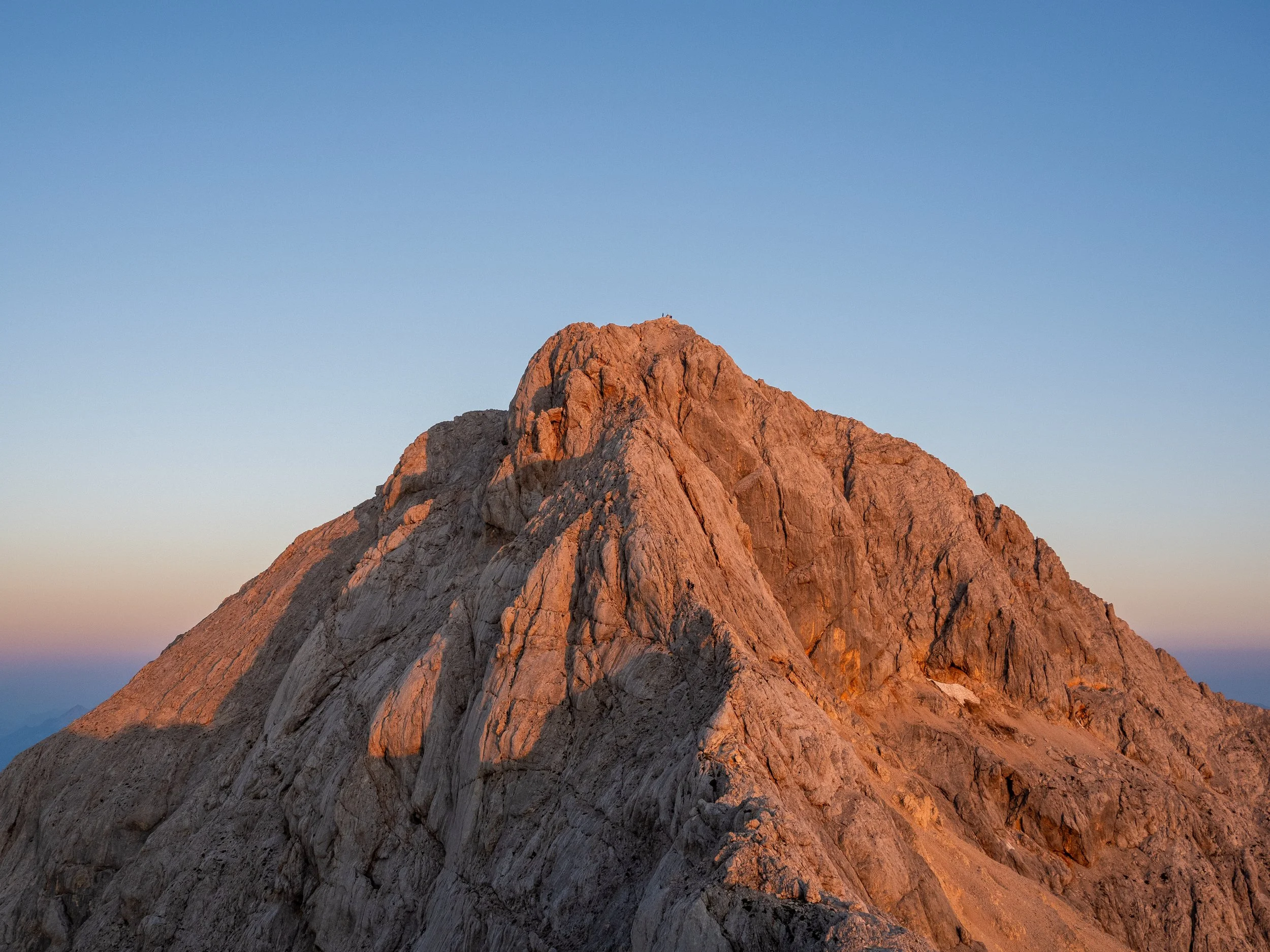
Because we were moving fast and light, this section felt almost playful, or at least as playful as things can feel when a mistake would have consequences best described as ‘final’. In truth, it was tremendous fun. We could move quickly, enjoy the exposure, and settle into that lovely alpine rhythm where hands and feet seem to work things out for themselves. All the while, the sun was beginning to melt into view, lifting the darkness and washing the rock in that soft early light that makes everything feel faintly heroic, even when you are slightly out of breath and dressed largely like someone on their way to a fell race. By the time we reached the summit just after 7am, the summit marker was glowing in glorious alpine light, and the whole thing felt absurdly worthwhile.
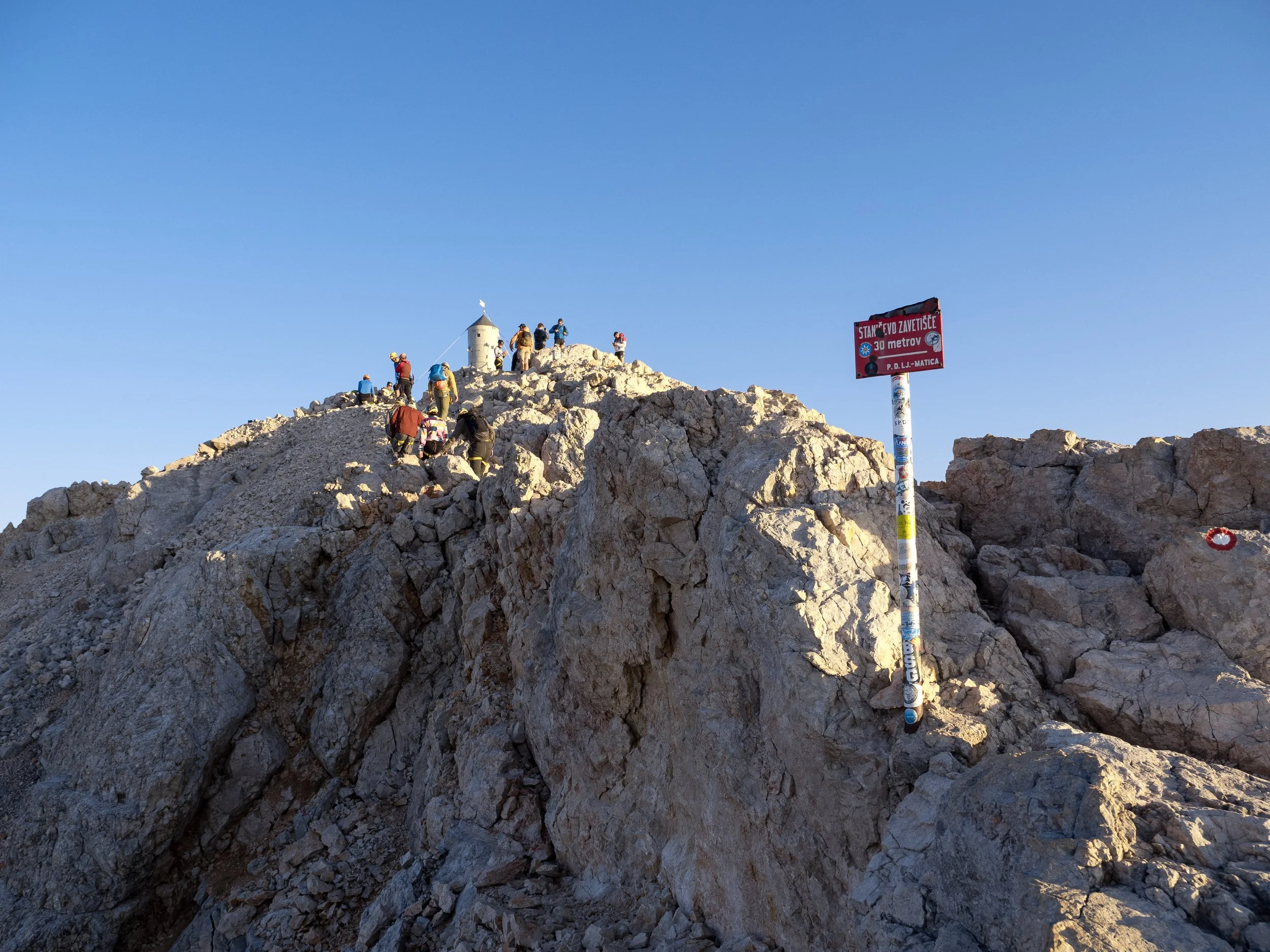
The summit itself is a fine place to linger for a bit. There is something deeply satisfying about standing there, looking out across the Julian Alps, and watching tiny figures in the distance slowly click off their head torches as they make their way towards the very spot where you are standing. At 2,864 metres, Triglav is modest by the standards of the great Alpine giants, Mont Blanc, the Matterhorn, and Gran Paradiso are all playing a rather different game, but it absolutely dwarfs anything we have in Cumbria, Wales, or Scotland. For seasoned alpinists, then, it is probably a pleasant morning out. For those more accustomed to the gentler Wainwrights of the Lake District, it feels like an absolute rock monster. And crowning it all is the Aljaž Tower, the little metal summit shelter that everyone appears compelled to touch, as if failing to do so would somehow invalidate the entire ascent.
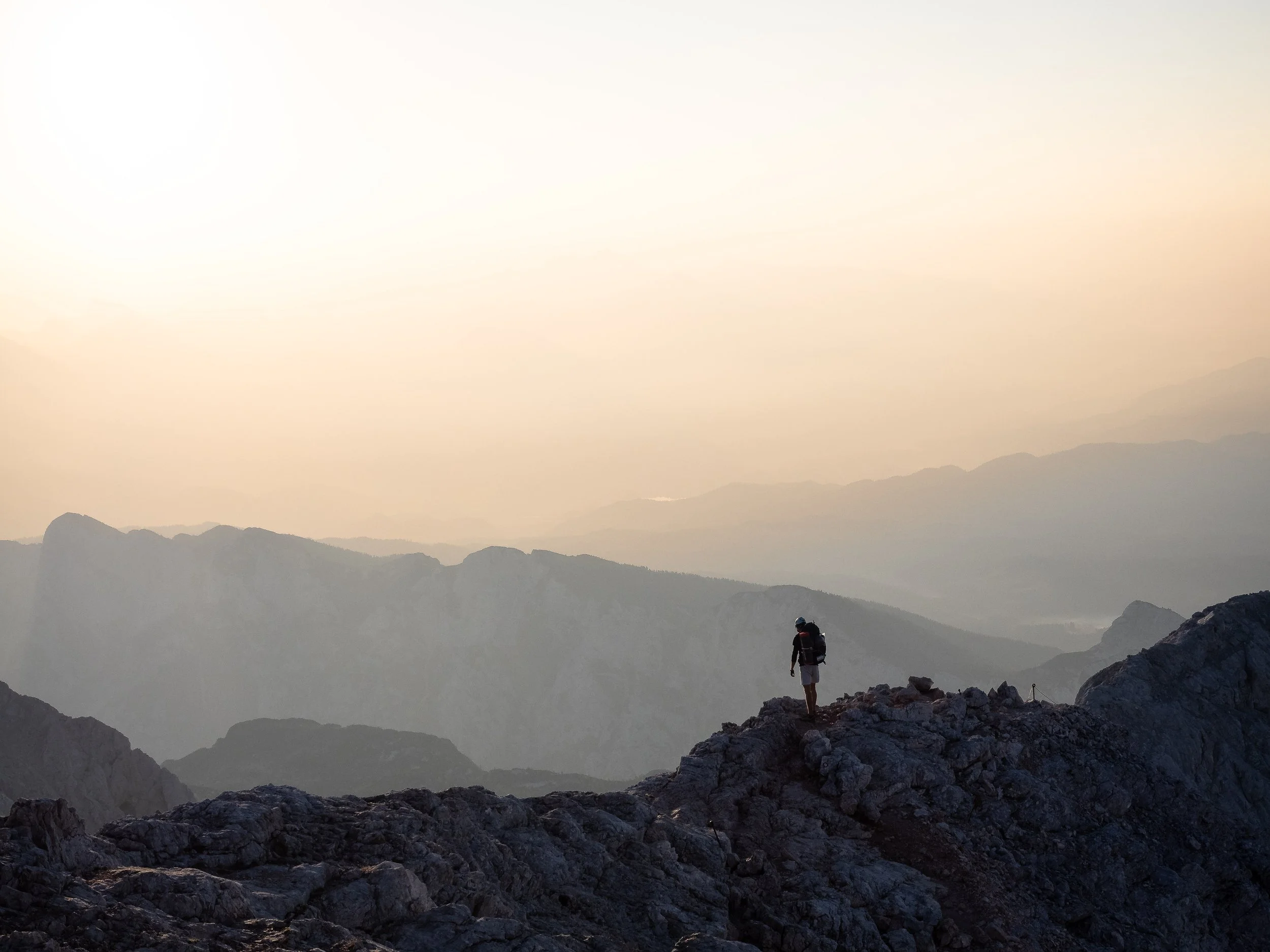
The summit itself is a fine place to linger for a bit. There is something deeply satisfying about standing there, looking out across the Julian Alps, and watching tiny figures in the distance slowly click off their head torches as they make their way towards the very spot where you are standing. At 2,864 metres, Triglav is modest by the standards of the great Alpine giants, Mont Blanc, the Matterhorn, and Gran Paradiso are all playing a rather different game, but it absolutely dwarfs anything we have in Cumbria, Wales, or Scotland. For seasoned alpinists, then, it is probably a pleasant morning out. For those more accustomed to the gentler Wainwrights of the Lake District, it feels like an absolute rock monster. And crowning it all is the Aljaž Tower, the little metal summit shelter that everyone appears compelled to touch, as if failing to do so would somehow invalidate the entire ascent.
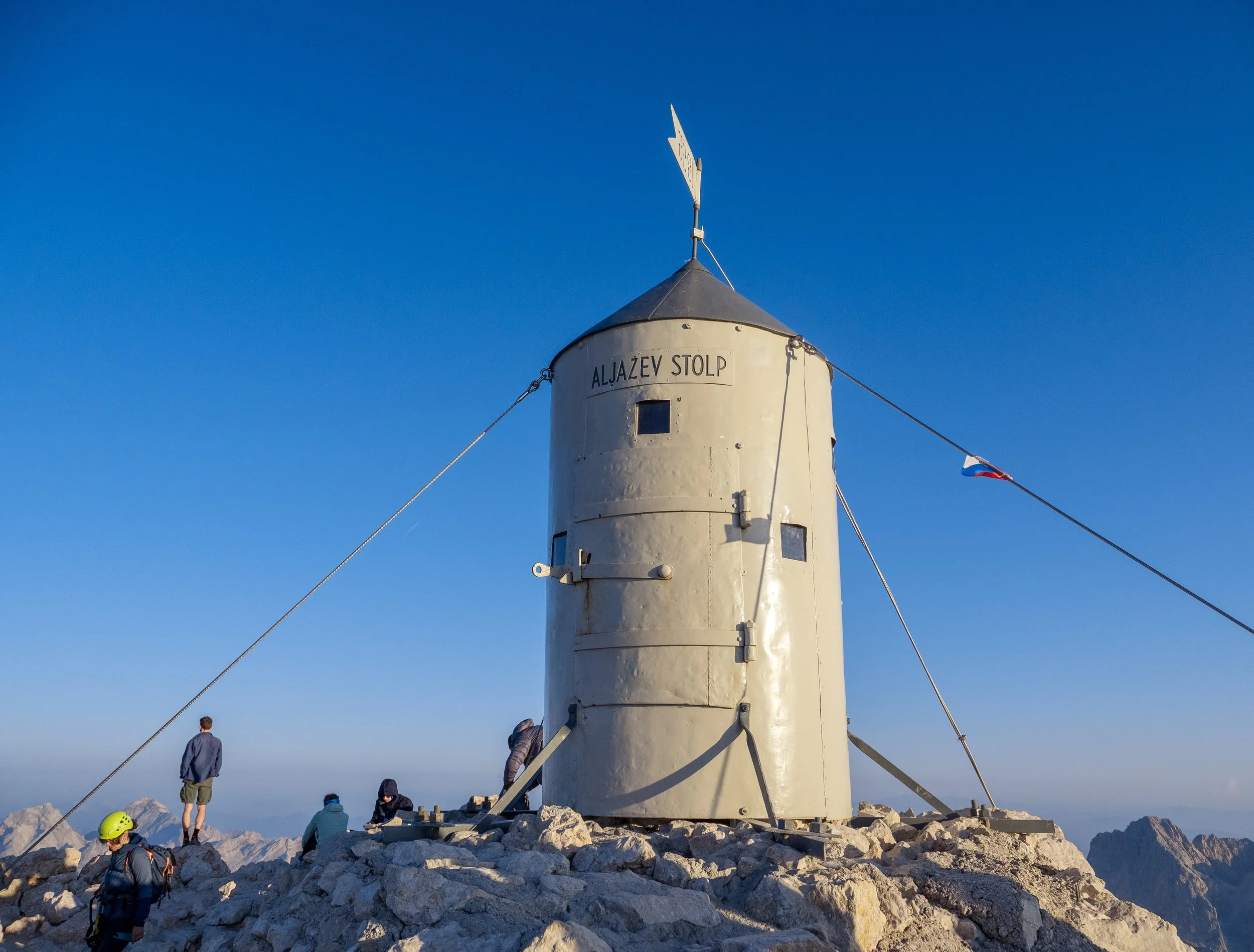
What gives Triglav its special weight, though, is not simply its height, but what it means. Despite being under 3,000 metres, it holds an outsized place in Slovenian identity. It is the country’s highest mountain, it gives its name to Triglav National Park, and it sits firmly at the centre of the national imagination. More than that, it appears in stylised form on the Slovenian coat of arms, which also appears on the national flag, so the mountain is quite literally woven into the visual identity of the state. The Aljaž Tower adds another layer of significance. Built in 1895 by the priest and patriot Jakob Aljaž, it became a symbol of Slovene cultural presence and pride. Add to that the famous idea that every Slovene should climb Triglav at least once, and it becomes clear that this is not just a mountain, but something closer to a rite of passage. Which is really quiet a lot for one modestly sized summit with a metal shed on top.
Pitch Five: Summit Achieved, Breakfast Required, The Long Way Back to the Vrata Valley via the Prag Route
With Nayeli and myself now feeling proudly Slovenian for having reached the summit, the next consideration was breakfast back at Triglavski dom. For this it was simply a case of retracing our steps and heading back along the ridgeline to the hut. For the most part this was hassle free. Easy going once the summit had been bagged. The only point at which things became a little tougher was the crowding on the vertical head wall on the northside. That which has the 250 metres of assent/descent close to the hut. Here most people were sensible, giving way to those already clipped to the via ferrata rods, or those that were visibly nervous or struggling, As such, with a little bit of waiting, and getting out of the way for those in need, the lines moved pretty well. Some of the professional guides were a tad pushy, shouting at waiting people to keep moving; none of them their clients but this was just at one bottleneck. No big deal.
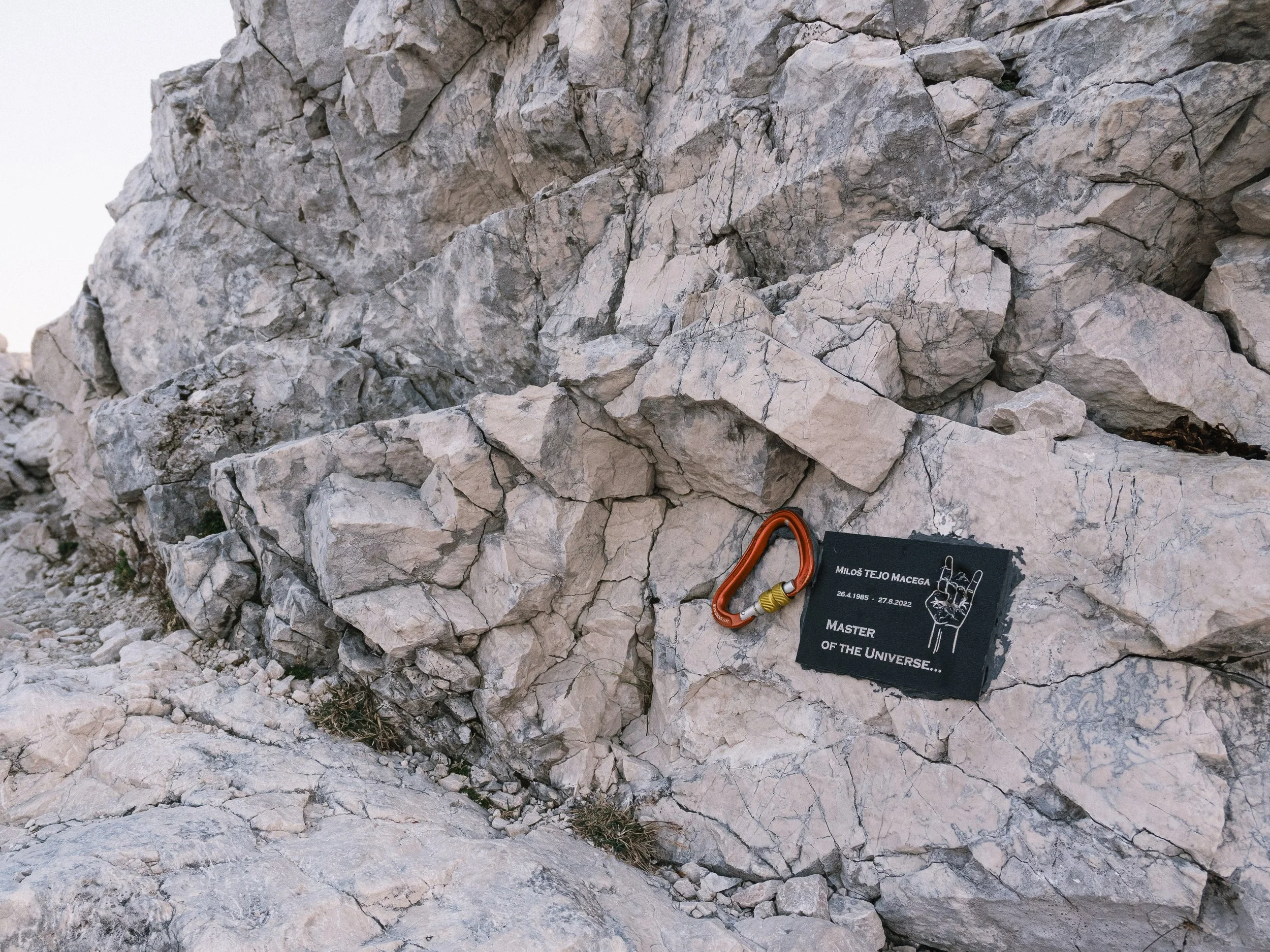
Arriving back at the hut it seemed the early start had paid off. The routes above were starting to become uncomfortably busy for our liking while Triglavski dom was blissfully quiet. An alpine breakfast with two people we had befriended en route (Flo and Anne from Germany) was a lovely way to enjoy eggs, bread, and coffee and a little bit of cake. With enough food still in our packs, along with gels, and water we said our goodbyes and headed for the Prag Route that winds back down to the lush Vrata Valley below. What a way down!
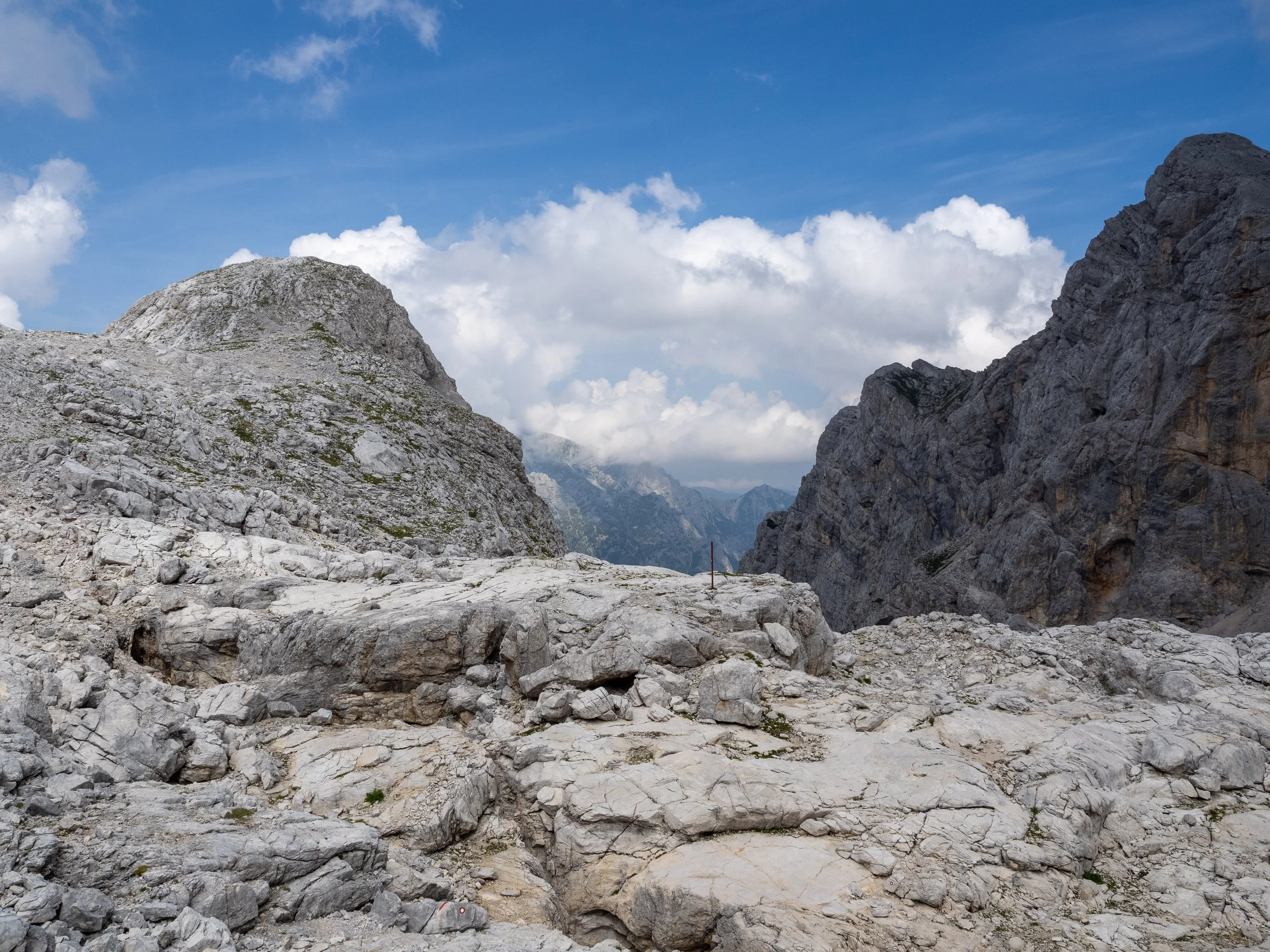
The Prag Route is the most direct, and supposedly sensible, way down from Triglavski Dom to Aljažev Dom, though after a summit day it mostly feels like an extended negotiation with gravity and tired legs. Leaving the hut, the path drops quickly across pale limestone beneath Triglav’s summit, zig-zagging down scree and polished slabs that seem carefully designed to expose any lingering overconfidence. The route is well marked with red and white dots acting a guides.
Short sections of cable provide reassurance and somewhere to steady yourself while pretending you stopped to admire the view rather than catch your breath. Gradually the harsh alpine terrain gives way to grass, dwarf pine, and finally forest, where shade and oxygen feel like small miracles. The descent drags just long enough to encourage reflection on pacing decisions, before Aljažev Dom appears, along with the deeply earned reward of sitting down and not moving again for a while.
Once in the valley the trees, running water, and level terrain was most welcome. Given that pesky ankle of mine still wasn’t one hundred percent it was a tiny weight of my mountaineering mind. From here the walk over to Aljaž Dom felt effortless. After downing a litre of water, a pint of Lasko (the local beer), probably the best mushroom soup I ever tasted, and a Slovenian version of apple strudel . We headed over to the bus stop to pick up that gloriously free ride back into Mojstrana. Given how popular this is it wasn’t full, but almost. With our legs aching we were faced with a moral question – two of us but just one seat remaining. Who should take it? Of course, the answer was neither of us.
Pitch Six - Proof That Planning Is Overrated and the Kindness of Strangers
Once we slung our packs back on and prepared for the 12km hike back to Mojstrana, we were reasonably content to finish on foot. We had already walked this stretch a week or so earlier, so we knew it wasn’t going to be especially gruelling. Still, the thought of a warm shower back at the apartment, clean clothes, flip flops, and another beer and pizza in the village was far more appealing than adding an unnecessary 12km extension to the day. With our carefully constructed, bus-based plan quietly collapsing, we set off regardless.
After roughly three whole minutes of walking, a car slowly pulled alongside us and the window slid down. My first thought was, ‘oh man, what did we, and by we I mostly mean me, do now?’ Had we forgotten to pay for our beer and mushroom soup? Had we unknowingly offended the Triglavian mountain gods? Was this some obscure alpine regulation about walking too slowly while looking exhausted?